I have watched more babies sleep on a small screen than on any television. Nine years as a pediatric nurse, two kids under five, and a nightstand that has held everything from a thirty dollar audio only unit to a four hundred dollar Wi-Fi flagship. When parents ask me for a no WiFi baby monitor comparison, they are not asking about megapixels or app ecosystems. They are asking a much smaller, much more specific question: which of these things will still show me a face at 3 a.m., and which one will hand me a buffering wheel while a toddler howls in the next room.
Related: How to Test Your Baby Monitor's Night Vision Before You Trust It
My pick for most families in this group is the Infant Optics DXR-8 PRO, because the parent unit is the strongest of the four and the local RF link keeps working when the router does not. The eufy SpaceView Pro is the big screen alternative that still stays off your Wi-Fi network. The Babysense Touch 7 is the one for a parent who genuinely wants app features and a touchscreen. And the budget 5 inch local unit is a reminder that the cheap end of this market is far better than it was when my first kid was born.
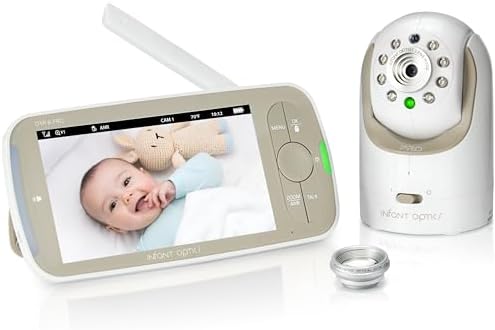
Infant Optics DXR-8 PRO
Best parent unit here, interchangeable lens system, no Wi-Fi and no app to fail
5 inch screen feels small next to a 7 inch panel, extra lenses cost more
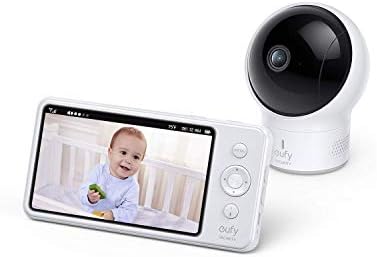
eufy Security SpaceView Pro
Strong local range reputation, sharp 5 inch screen, no app required
This listing is a Renewed unit, and the wide angle lens is not included
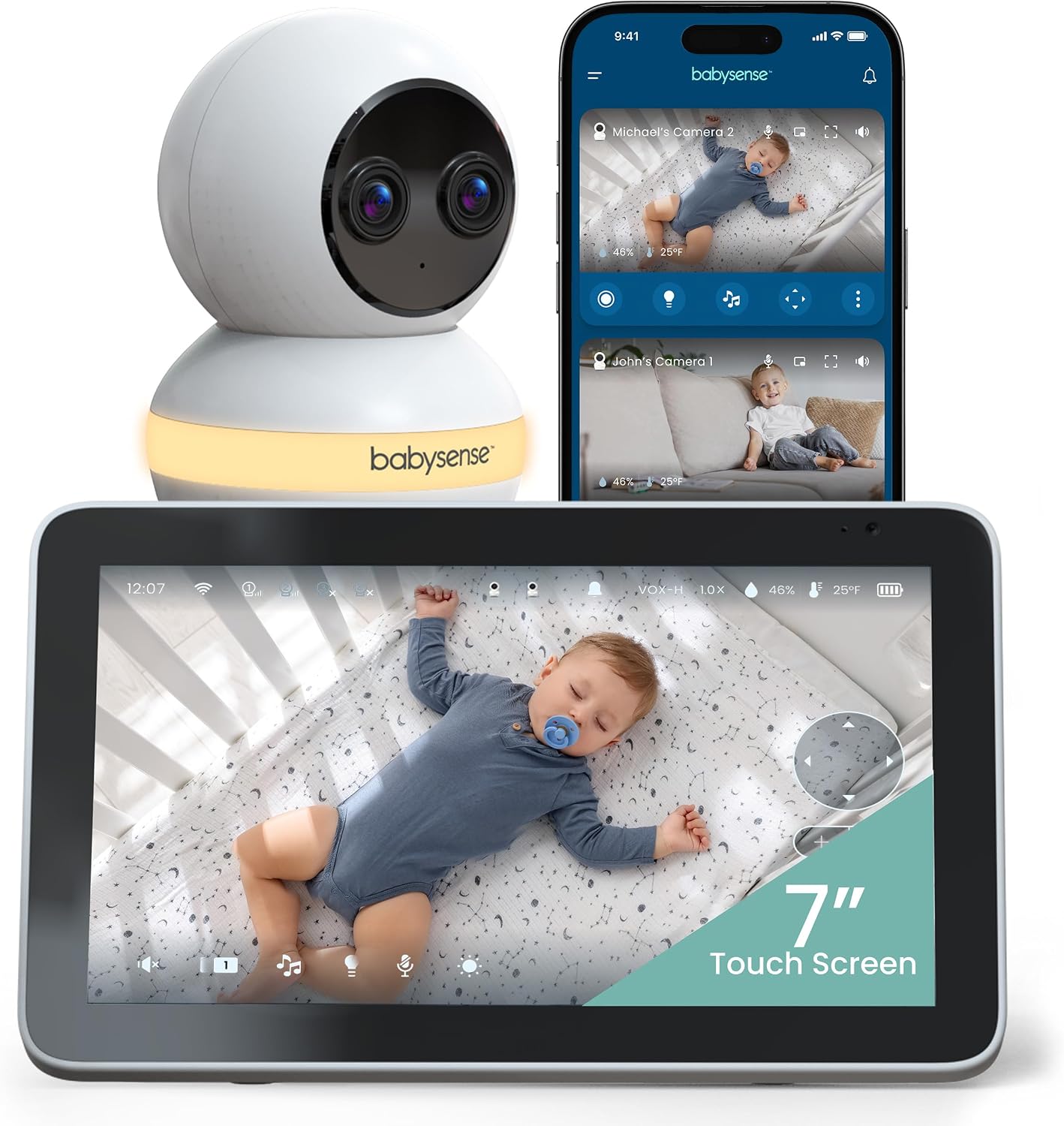
Babysense Touch 7
Big touchscreen, 4MP dual lens, AI tracking, and no subscription
It lives on your Wi-Fi, so a router hiccup becomes your problem
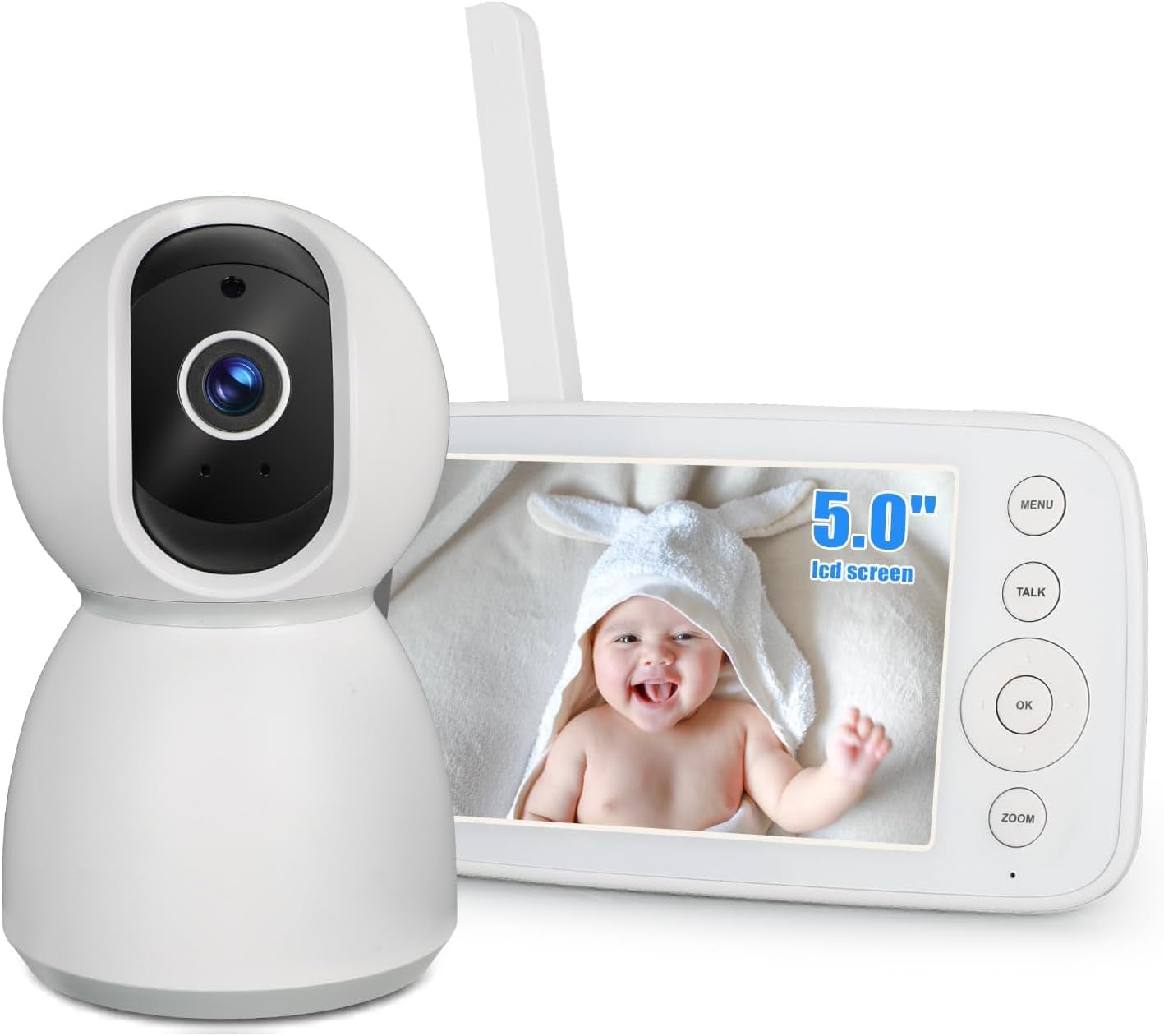
No WiFi Baby Monitor Camera, 5 Inch LCD
Lowest cost way to get local video with pan, tilt, and night vision
Generic branding, thin support, and I would verify the night vision myself
Prices and availability were captured from Amazon Creators API and may change.
What I actually judge a monitor on
Four things, in this order.
Night vision in a genuinely dark room. If I cannot see the rise and fall of a chest at 2 a.m., I am holding a radio, not a monitor. Nursery dark means dark, not dim with a hallway light bleeding under the door.
Range from the kitchen and the far bathroom. A feed that drops when I walk to the sink is a screensaver with anxiety attached. Local RF units have a real advantage here because they are not competing with the rest of your household's bandwidth.
The parent unit. The camera is the accessory. The handset is the product. Battery life, screen brightness at 3 a.m., how loud the speaker gets, and whether the buttons are findable by feel in the dark all decide whether you use the thing or resent it.
What happens when the internet dies. That question only applies to one monitor on this list, and it is the reason three of these four exist in the first place.
Cry detection does not make my list. A monitor that tells me my baby is crying while I can hear him through the wall has added a notification, not a capability.
Infant Optics DXR-8 PRO: the local standard
The DXR-8 PRO is a 5 inch HD parent unit with pan, tilt, and zoom, and it is the only monitor in this group with an interchangeable lens system. That matters more than it sounds. A standard lens covers a crib. A wide lens covers a crib plus the door, which is what you want once a toddler starts climbing out. Being able to change the lens instead of buying a second camera is the kind of feature that pays for itself around month eighteen.
The patented active noise reduction is a microphone feature, not a video feature. It filters steady room noise so the audio you hear is closer to your baby and further from the box fan. In a nursery with a sound machine running, that is the difference between usable audio and constant static.
There is no Wi-Fi and no app, which the manufacturer frames as hack proof because there is no network path into your house. I frame it more simply: there is nothing to buffer and nothing to update. Visit on Amazon → if the parent unit matters more to you than screen size.
The honest criticism is the 5 inch screen. Once you have watched a 7 inch panel, going back feels like squinting. The interchangeable lenses are also sold separately, so budget for them if you want the wide view.
eufy Security SpaceView Pro: the local range play
The SpaceView Pro pairs a 5 inch screen with 720p video, pan and tilt, two way audio, night vision, and a lullaby player, and it needs no app at all. Eufy's antenna design has a reputation for reaching across a large house, which is exactly the scenario where local RF beats Wi-Fi: two floors, a finished basement, and a router on the opposite end of the building.
Two caveats before you click. First, this listing is a Renewed unit, which means a refurbished monitor rather than a new one. That is often a fine way to save money, but read what the seller covers and confirm the return window before you commit. Second, the listing says the wide angle lens is not included, so plan on the standard field of view unless you buy the lens separately.
If you want a bigger, sharper local screen without touching your home network, Visit on Amazon → and check the current listing details yourself.
Babysense Touch 7: the Wi-Fi exception
This is the one monitor here that asks for your network, and it earns the exception. A 7 inch touchscreen, a 4MP dual lens camera, 6X zoom, AI auto tracking, a focus area you can draw on the screen, split screen support, a night light, and VOX/ECO mode for battery and bandwidth savings.
The feature I care about most is the one that is missing: there is no subscription. I have a hard rule about this. I will not rent the ability to see my own child. Plenty of smart monitors gate basic history or alerts behind a monthly fee, and Babysense advertising no subscription on this model is a real differentiator, not a footnote.
The trade-off is structural. On Wi-Fi, your phone becomes the parent unit, which means your phone battery, your phone notifications, and your router all become part of your night. AI auto tracking and 6X zoom are genuinely useful once a baby becomes a mobile toddler who refuses to stay in frame, and the 7 inch touchscreen is the nicest display in this group. If you want those features and you have a stable network, Visit on Amazon →.
The budget 5 inch no WiFi unit
This is the one that surprises people. A 5 inch LCD parent unit with pan, tilt, night vision, and two way audio, running local, with no app, no account, and no subscription. It does the core job: you see your baby in the dark and you hear your baby in the dark, without asking your router for permission.
What you give up is everything around the core. The branding is generic, so support and documentation are thin. The listing tells you less about the sensor and the lens than the name brand listings do. And because I have been burned by cheap monitors that advertised night vision and delivered a grainy gray smear, I would test this one in a pitch dark room before trusting it for a full night. Put it on a shelf, turn off every light, and look at the screen. If you can see the outline of a onesie, it works. If you cannot, return it.
For a second camera in a guest room, a grandparent's house, or a tight budget, Visit on Amazon →.
The trade-offs nobody puts on the box
Renewed versus new. One of these four is a Renewed listing. Refurbished monitors can be excellent value, but warranty length and return terms vary by seller, so that is the first thing I would read.
Screen size versus portability. A 7 inch touchscreen is lovely on a nightstand and awkward at 4 a.m. when you are carrying a baby and a bottle in the other hand. A 5 inch handset is easier to live with.
Wi-Fi versus local RF. Wi-Fi gives you remote viewing, app features, and a bigger screen. Local RF gives you a link that does not care whether the router rebooted, the ISP is down, or the neighborhood lost power for a minute.
Field of view. A standard lens on a crib is fine. A standard lens on a crib plus a climbing toddler is not. Know which lens you are getting, especially on the eufy listing.
Subscriptions. Ask before you buy. If seeing your own baby requires a monthly fee, that is a rental, not a purchase.
Do you need Wi-Fi on a baby monitor?
Most families do not, and I say that as someone who owns a Wi-Fi camera for daytime naps watched from the backyard. The case for local RF is simple: fewer failure points between your baby and your eyes. The case for Wi-Fi is also simple: bigger screens, app features, remote viewing, and the ability to check in from work or from the driveway.
If your house has thick walls, an older router, or a habit of dropping connections, local RF is the safer default. If you want AI tracking, zoom, and a large touchscreen, and your network is solid, the Babysense Touch 7 is the model here built for that.
What I would buy
For a first monitor in a normal sized house, the Infant Optics DXR-8 PRO. The parent unit is the best of this group, the interchangeable lens system grows with your kid, and there is no network to fail at 3 a.m.
For a large house where range is the whole problem, the eufy SpaceView Pro, with the caveat that this particular listing is Renewed and the wide angle lens is not included.
For app features and a big touchscreen with no subscription, the Babysense Touch 7.
For a second room or a tight budget, the 5 inch no WiFi unit, after you have verified the night vision in a truly dark room.
Sleep safety is not a feature list. It is about seeing your baby clearly when it counts, and every monitor on this list can do that if you pick it for the right room and the right night.