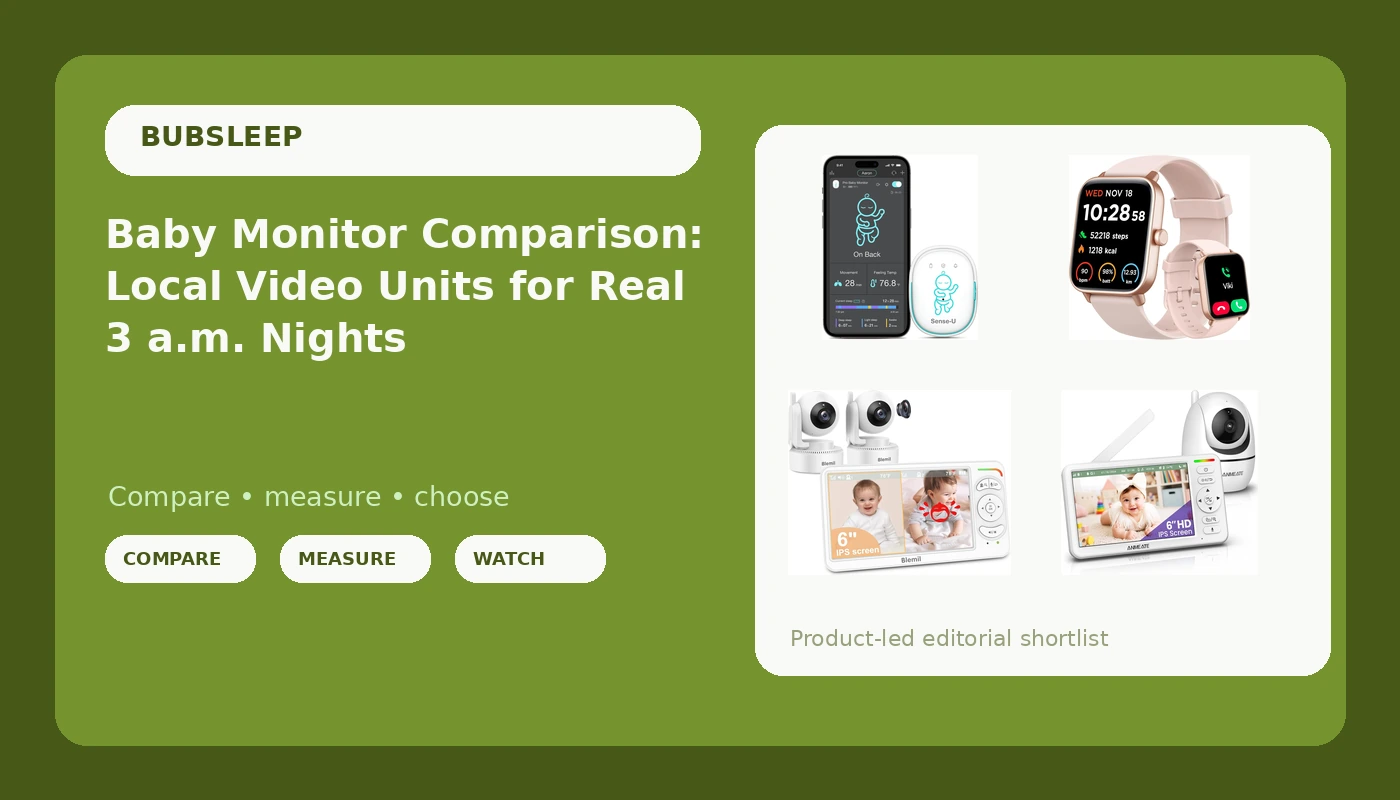
I have been a pediatric nurse for nine years and a mom for five of them, and I still remember the night I realized the video monitor from my registry could not actually see my daughter in a dark room. The camera was fine. The night vision was a gray smear with a baby-shaped shadow in it, and I spent the next hour sitting on the floor next to the crib instead of in my own bed. That night is why I evaluate monitors the way I do now: pitch dark, kitchen distance, parent unit in hand. This baby monitor comparison covers four devices that get recommended to new parents, two local video monitors with dedicated screens, one clip-on movement monitor, and one wrist wearable that keeps appearing in the same searches even though it is not a baby monitor at all.
For most families, the strongest pick here is the Blemil 6 inch split screen monitor, because two cameras feeding one parent unit covers a nursery and a toddler room without buying two separate systems. If you have one crib and one kid, the ANMEATE is the simpler answer, and the Sense-U Pro is the one I would treat as an add-on rather than a replacement for a camera.
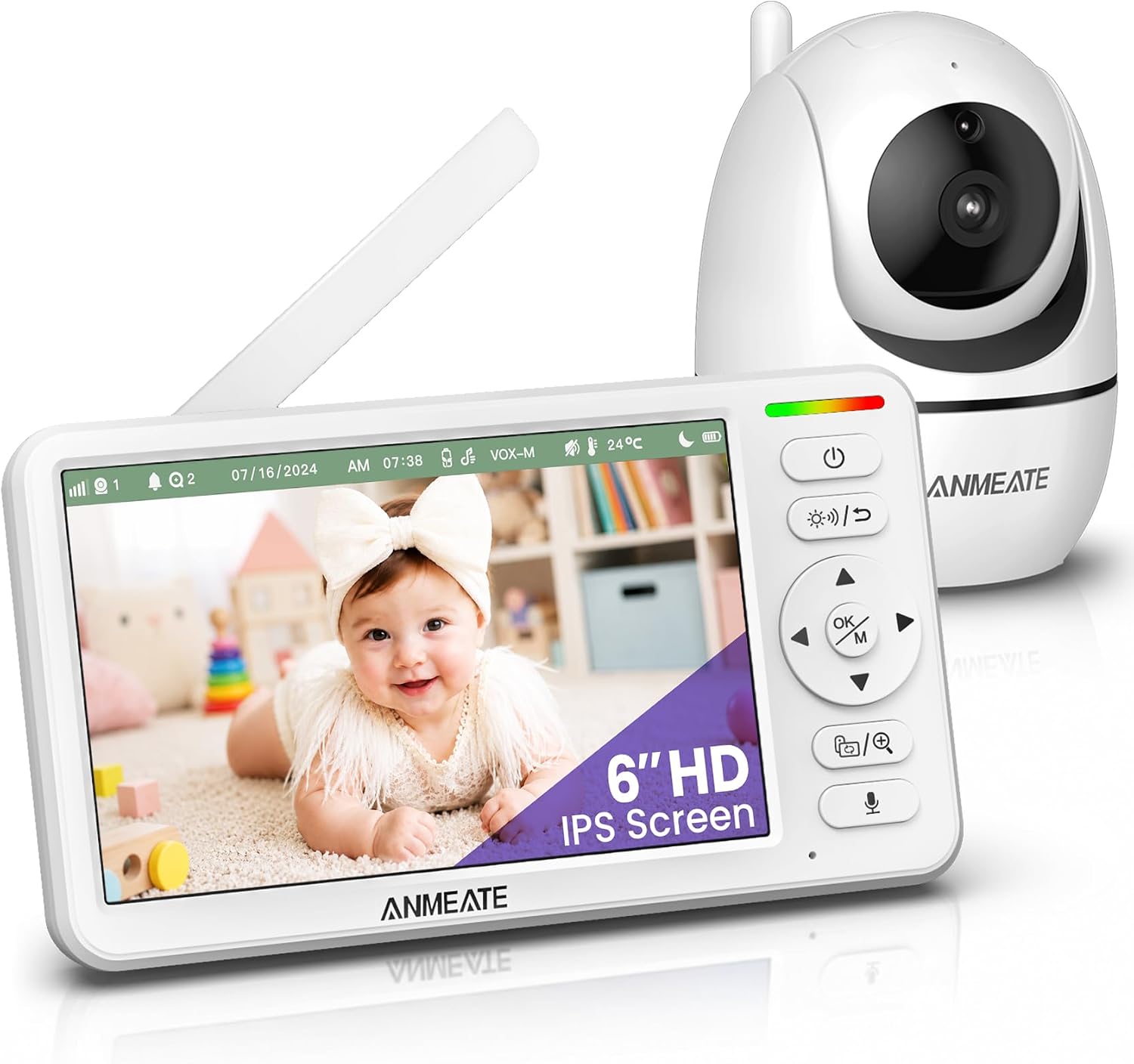
ANMEATE 6 inch Video Baby Monitor with Camera and Audio, No WiFi
No WiFi, no app, no account, and a dedicated 6 inch parent unit that keeps working when your router does not
One camera and no split screen, so a second kid means a second monitor, and the feature set is deliberately plain
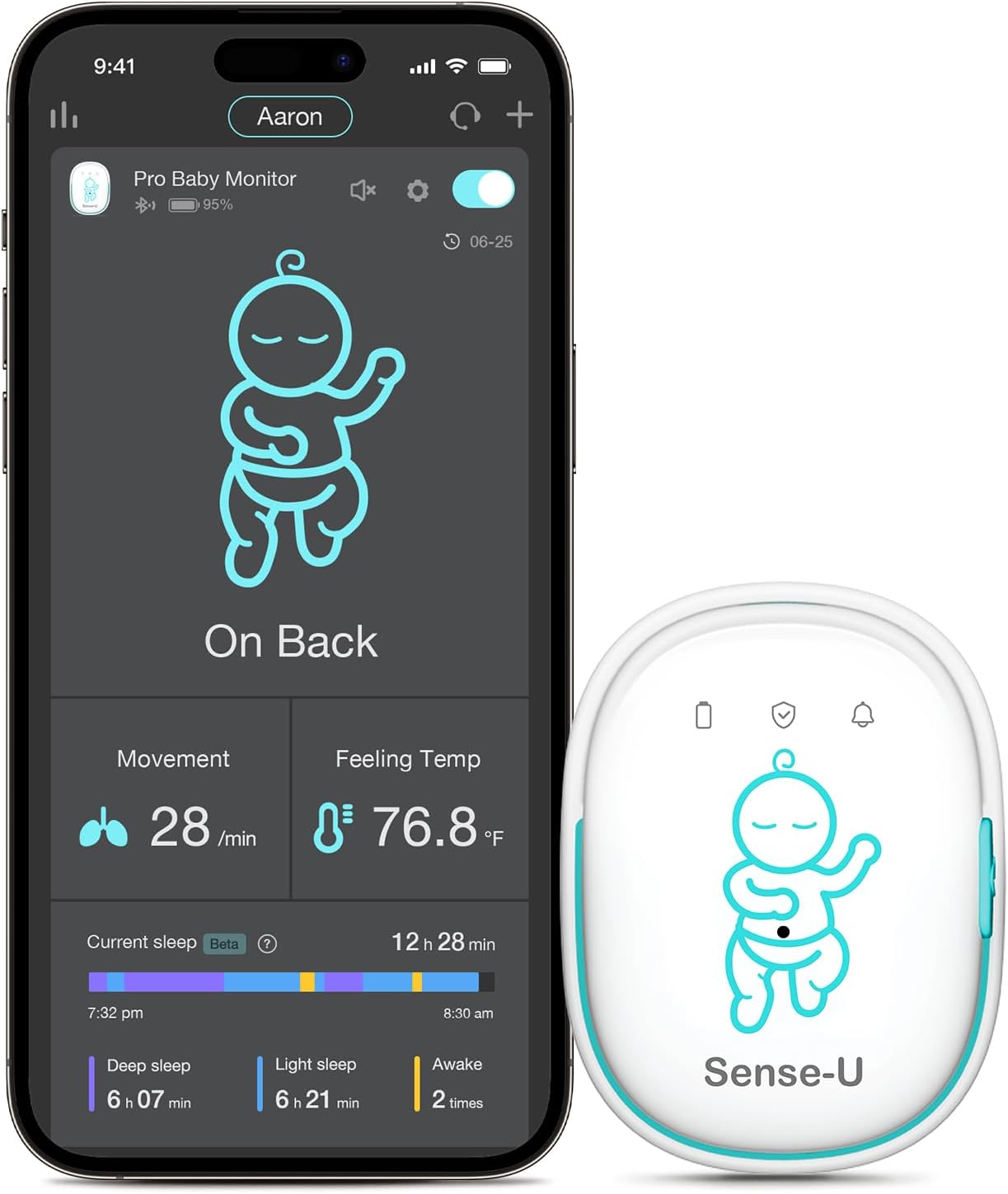
Sense-U Pro Baby Movement and Sleep Position Monitor
Clip-on movement and sleep position tracking with sleep analysis and a long battery life, and nothing to mount over the crib
Not a video monitor, so there is no night vision and no view of the crib, and it lives on your phone
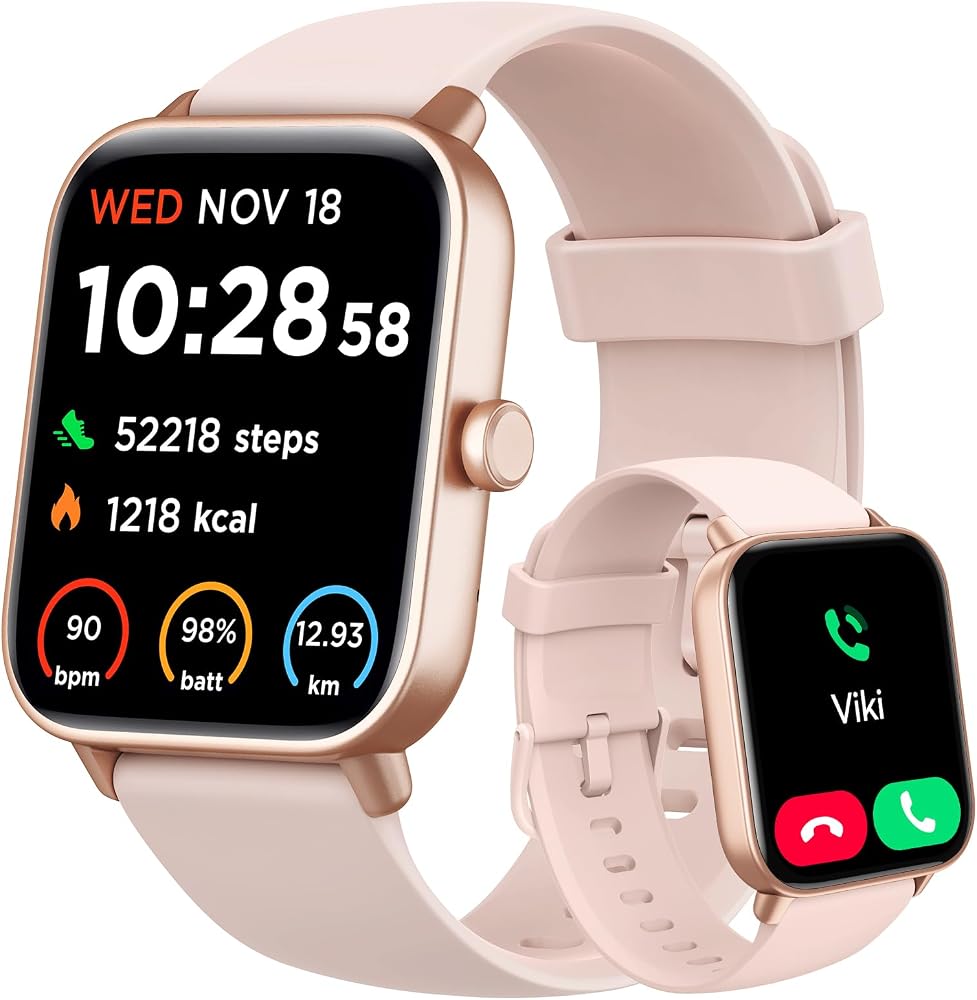
Smart Watch for Women with Alexa Built-in, IP68, and Sleep Monitor
The only device here that watches the parent, with Bluetooth calls, heart rate, SpO2 and sleep tracking, and 100+ sport modes
It cannot see your baby, and pairing it with a phone-based camera puts the Wi-Fi dependency right back in the middle of your night
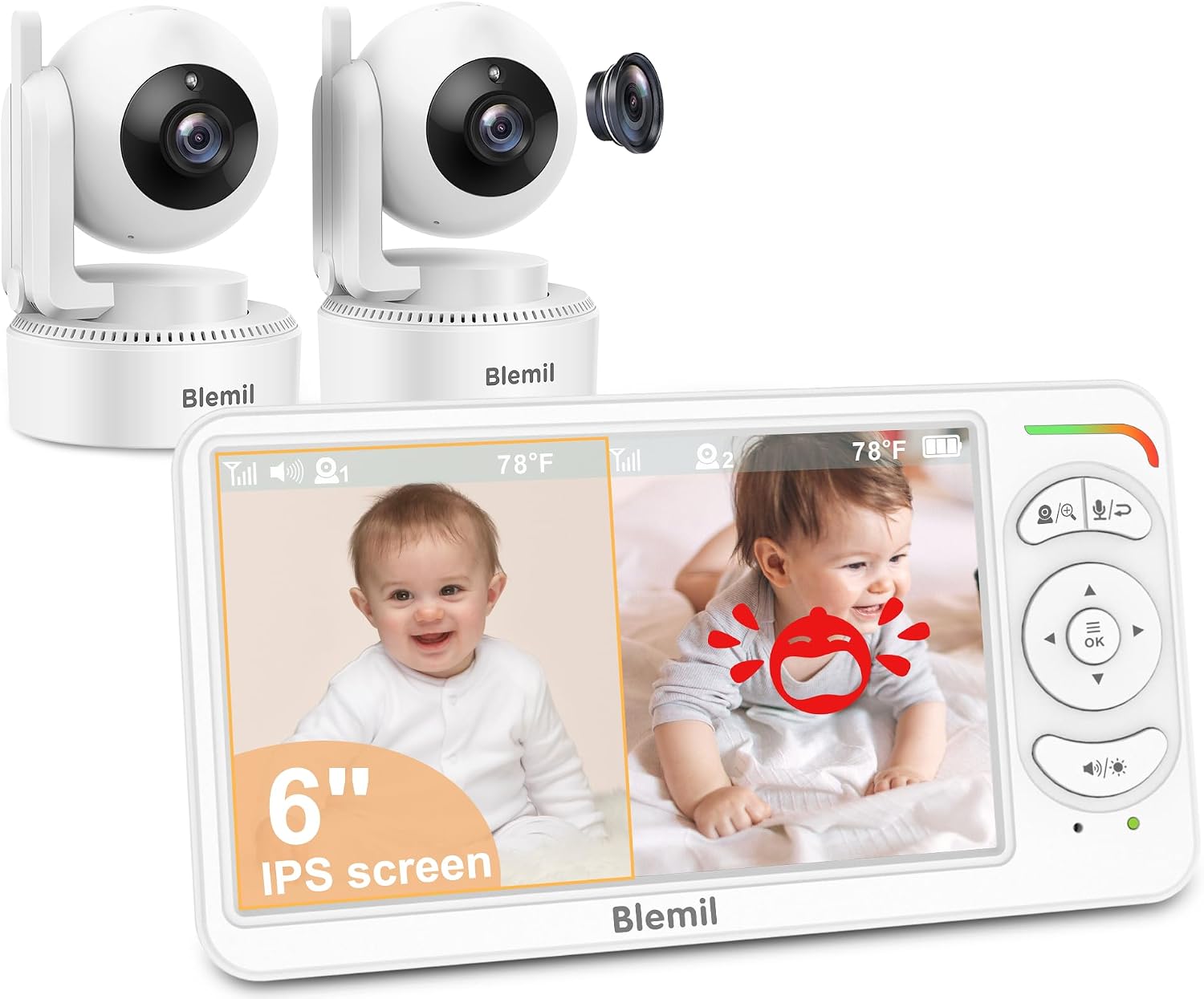
Blemil 6 inch Split Screen Video Baby Monitor with 2 Cameras
Two cameras on one 6 inch screen with a 4000mAh battery in the parent unit, so two rooms share one handheld
Split screen shrinks each feed to half a panel, and two cameras mean two mounts and more cable to route
Prices and availability were captured from Amazon Creators API and may change.
How I evaluate a baby monitor
Three checks, in this order, and none of them happen in daylight.
First, night vision in a genuinely dark room. A nursery at 2 a.m. is darker than any store display, and infrared performance is where cheap monitors fall apart. If I cannot tell whether the blanket is over a face, the camera has failed at its only job.
Second, range. I walk to the far side of the kitchen, close the door, and stand next to the running dishwasher. A sharp feed that drops when you go make coffee is a screensaver with anxiety attached.
Third, the parent unit, through a full night plus a 3 a.m. feed. Battery life, screen brightness at its lowest setting, and how it feels when you are holding a baby in one arm. A monitor with a wonderful camera and a parent unit that dies at 2 a.m. is a failed device.
Two things I do not care about. Cry detection, because I can hear my own baby. And any feature that requires a monthly fee to see my own kid. You should not rent peace of mind.
ANMEATE 6 inch video monitor: the local link, nothing else
The ANMEATE is a 6 inch video monitor with a camera, audio, and no WiFi. That last part is the whole pitch. There is no app, no account, no firmware update landing at bedtime, and no router in the middle of the link between the camera and the screen in your hand. When the internet goes down at 1 a.m., this monitor does not notice.
What it gives up is everything else. One camera means one room. No split screen means you cannot add a second crib without buying a second system. The feature list is short on purpose, and if you want sleep analytics or phone alerts, this is not the device for you.
If your household has one crib, one baby, and a strong preference for a screen that simply works every night, this is the one to look at: ANMEATE 6 inch video baby monitor. Visit on Amazon to check the current listing details.
Blemil split screen monitor: two rooms, one parent unit
The Blemil takes the same idea and doubles the coverage. Two cameras feed a single 6 inch screen in split view, and the parent unit carries a 4000mAh battery, which is the spec that matters most when you are the one holding it at 3 a.m. For a house with a nursery and a toddler room, this replaces two separate monitors with one handheld.
The trade-off is geometry. Split screen means each camera gets roughly half of a 6 inch panel, so night vision quality per camera matters more here than it does on a full screen unit. Small details, like whether a sleep sack is pulled up over a chin, are harder to read at half size. You also have two mounts to install and two cables to route, which is a small project the first weekend and a non-issue after that.
If you are setting up two rooms at once, start here: Blemil 6 inch split screen video baby monitor with 2 cameras. Visit on Amazon for the full specifications.
Sense-U Pro: the wearable that answers a different question
The Sense-U Pro is not a camera. It is a clip-on monitor for movement and sleep position, with sleep analysis and a long battery life, and it attaches to what your baby is wearing instead of hanging on a wall. That means it answers a different question than the video monitors above. It does not tell you what your baby looks like. It tells you whether they are moving and what position they are in.
I want to be careful here, because I say this to parents at work every week. No consumer wearable is a safety device, and nothing you clip on a onesie changes the safe sleep rules. Alone, on the back, in a crib, with a firm mattress and nothing soft in the sleep space. That is what the evidence supports, and it is what the AAP guidelines say.
Used as an add-on for a parent who wants position and movement information on their phone, the clip-on design and sleep analysis are genuinely useful, and the long battery life means fewer charges. Used as a substitute for seeing your baby, it will leave a hole in your night. The two work best together: Sense-U Pro movement and sleep position monitor. Visit on Amazon to read the setup requirements before you buy.
The smartwatch that is not a baby monitor
This one shows up in baby monitor searches constantly, and I understand why. It is a smart watch for women that works with Android and iPhone, with Alexa built in, IP68 waterproofing, Bluetooth calling, a 1.8 inch display, heart rate and SpO2 monitoring, sleep monitoring, and more than 100 sport modes. Parents want one device on their wrist instead of three gadgets on the nightstand.
But it cannot see your baby. There is no camera, no night vision, and no crib view. It is a wearable for you, not for the nursery, and buying it expecting it to watch a sleeping infant will end in disappointment and a return label.
What it does well is the part of the night nobody sells you: your own sleep. If you are tracking how badly you are sleeping through the four month regression, this is the device that tells you, and it also handles calls and step counts the rest of the day. Just pair it with an actual monitor rather than instead of one: smart watch for women with sleep and heart rate tracking. Visit on Amazon for the compatibility details.
Night vision, range, and the parent unit: what actually decides this
Night vision is the feature. If you cannot see your baby at 2 a.m., you have bought a radio, not a monitor. Infrared range and clarity are the first things I check on any camera, and they are the first place budget units cut corners. Look for a camera that can handle a room with no light source at all, not a room with a hallway nightlight bleeding under the door.
Range matters more than resolution. A 1080p feed that drops when you walk into the kitchen is worse than a softer feed that holds. Local monitors that link camera to parent unit directly do not buffer, do not log out, and do not care what your router is doing. Wi-Fi cameras are convenient for daytime naps and for checking in from the backyard, and I use one for exactly that. But I would not want my 3 a.m. check to depend on a device that reboots itself.
The parent unit is the product. Battery life, screen brightness at the lowest setting, speaker clarity, and how it sits in your hand while you are carrying a baby. This is why the 4000mAh battery on the Blemil matters and why the dedicated screen on the ANMEATE matters. Cameras are the easy part. The handheld is where monitors are won and lost.
Field of view is the quiet spec nobody lists on the box in big letters. A standard nursery needs a camera that sees the whole crib, and 110 degrees is about the minimum. If you mount a narrow camera in a corner, you will spend the first month adjusting it every time your baby rolls.
The trade-offs nobody puts on the box
Two cameras on one small screen is a coverage win and a detail loss. You see both rooms, but you see each one at half size.
A wearable on your baby is a data win and a visual loss. You get position and movement, but you never see the crib.
A wearable on your wrist is a sleep-tracking win and completely irrelevant to the nursery. It is for you.
Subscriptions turn a purchase into a rental. Read the feature list twice before you buy anything that gates basic viewing behind a plan.
What I would buy, and for whom
One crib, one kid, and a preference for a screen that works without an app: the ANMEATE. No WiFi, no account, no drama.
Two rooms, or a nursery plus a toddler who has learned to climb out of bed: the Blemil, because one parent unit showing two cameras is worth the smaller individual feeds.
A parent who wants movement and position information on their phone, and understands that it is not a camera: the Sense-U Pro, as an add-on to a video monitor, never as a replacement.
A parent who wants to know how badly they are sleeping, with heart rate and SpO2 on their wrist: the smart watch, paired with a real monitor.
The test that matters is not in the spec sheet. It is whether you can see your baby clearly, from your own bed, at 3 a.m., on a night when the internet is out and the parent unit has been on since 7 p.m. Buy for that night. Everything else is marketing.