I have been a pediatric nurse for nine years and a mom for five of them, and I have spent more nights watching a baby monitor than I have spent sleeping. My first registry monitor could not see in the dark, which I found out at 2 a.m. with a newborn and a screen full of gray static. That night is why I test the way I do now: a pitch-dark check, a walk to the kitchen, and a parent unit that has to survive until morning. This baby monitor comparison covers four items that landed in the same shopping list, three of them actual baby monitors and one of them a desk accessory that happens to share the word "monitor." I am leaving it in, because the confusion is real and worth clearing up in one place.
The short version: the no-Wi-Fi 5-inch LCD camera is the value pick for a first monitor, the Babysense True Sleep HD is the one I would put over a crib when movement alerts matter, and the Hubble Nursery Pal Glow+ is the pick when you want a dedicated parent unit and app viewing on the same system. The Ergotron LX Monitor Arm is excellent gear, and it is not a baby monitor.
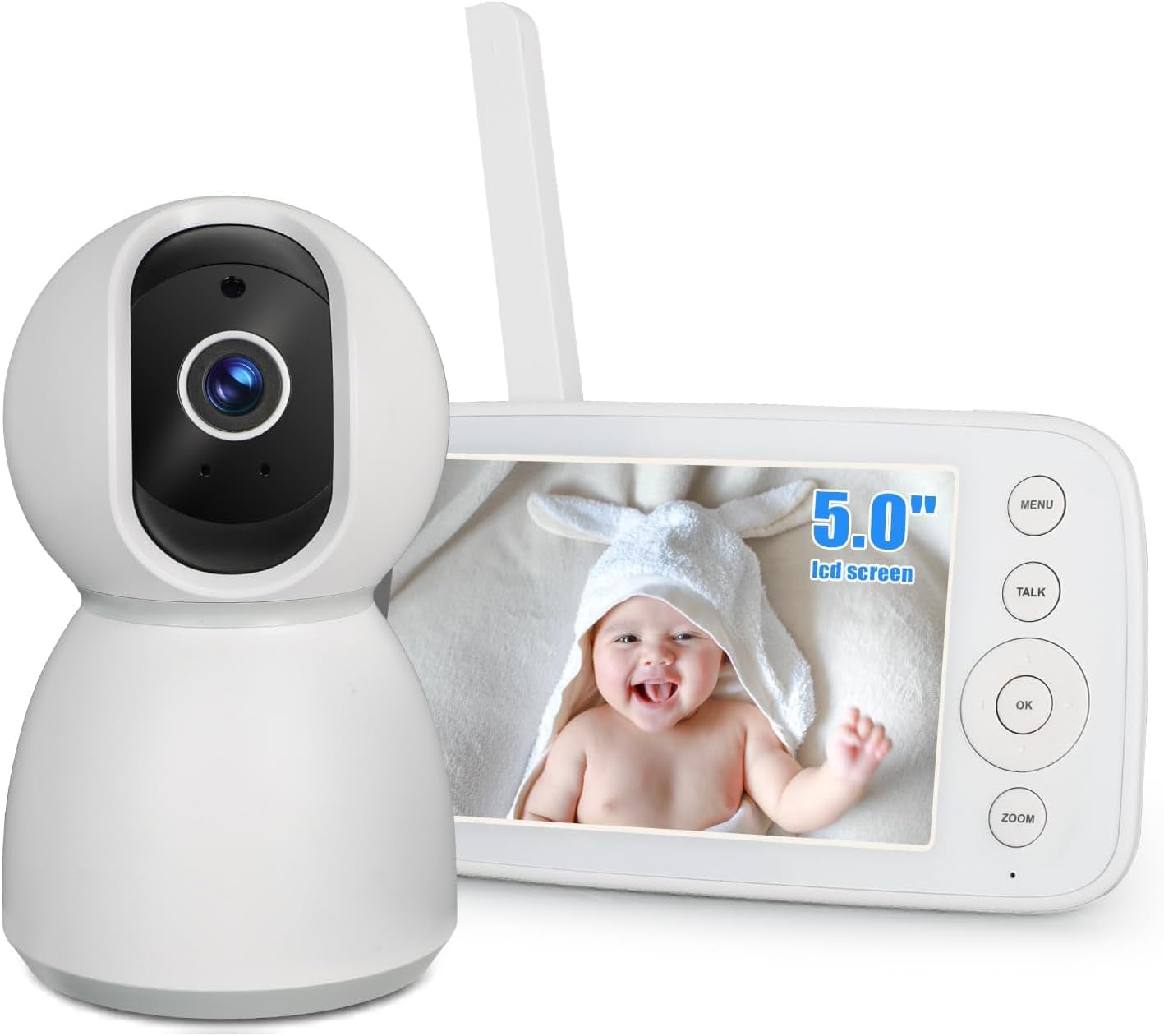
No WiFi Baby Monitor Camera, 5 Inch LCD Pan-Tilt, Night Vision, 2-Way Audio
The simplest thing here: a dedicated 5-inch parent screen, pan and tilt, night vision, two-way audio, and no router involved anywhere
No app viewing, no movement or breathing data, and a smaller screen than the Hubble's parent unit

Hubble Connected Nursery Pal Glow+ Smart Baby Monitor with 5" Parent Unit and Wi-Fi Viewing via Free App
Gives you both worlds: a 5-inch parent unit plus app viewing, with remote pan tilt zoom, two-way talk, infrared night vision, a 7-color night light, and a sleep trainer
The app side depends on your Wi-Fi holding up, and the night light and sleep trainer are extras that never fix a bad feed
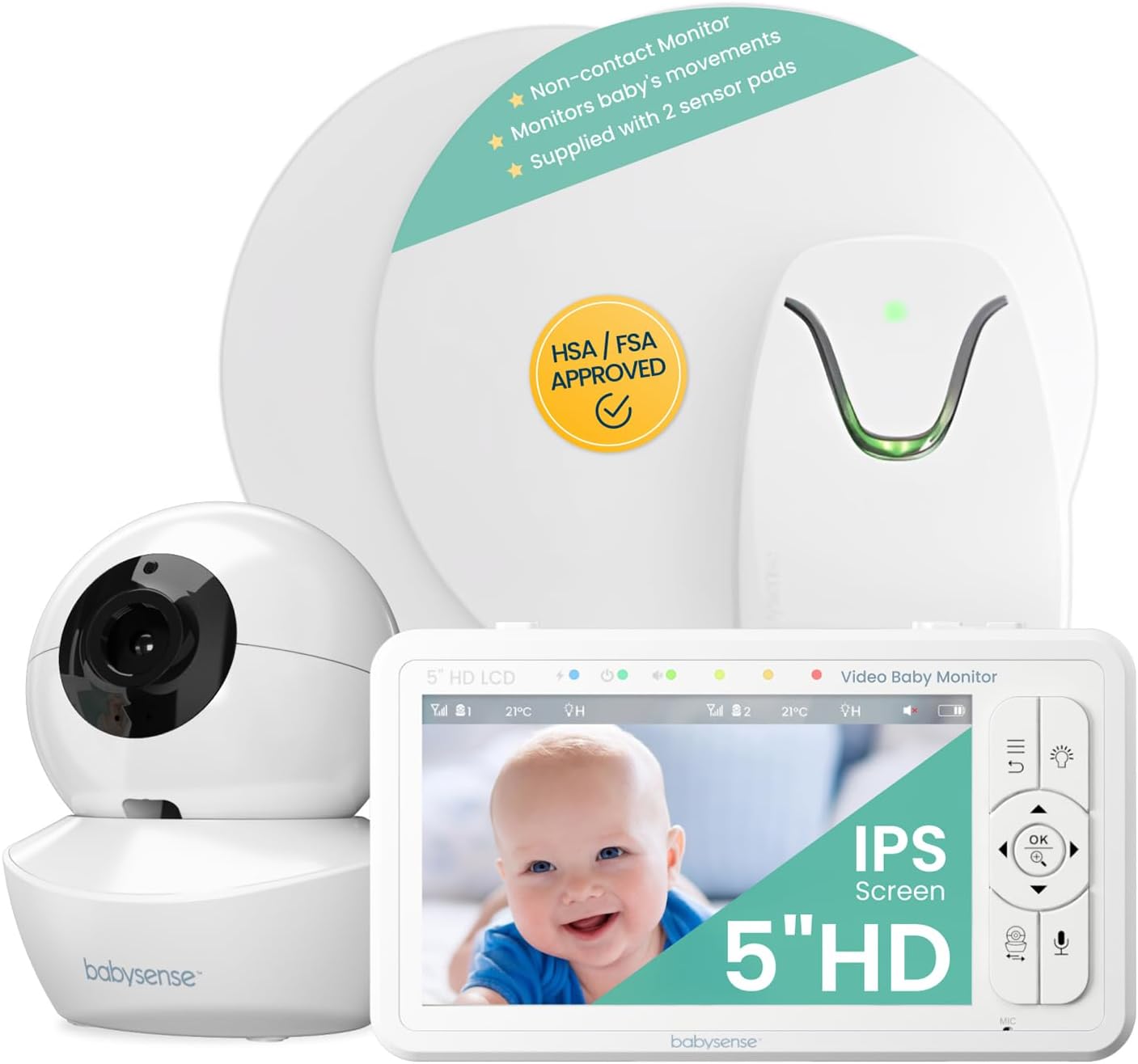
Babysense True Sleep HD Baby Monitor with Camera and Audio + Baby Sleep Movement Monitor
Camera, audio, and non-contact movement monitoring in one system, no Wi-Fi, two under-mattress sensors, non-wearable, full crib coverage
Two sensors mean routing cables under the crib, it is not a pack-and-go travel monitor, and there is no app view
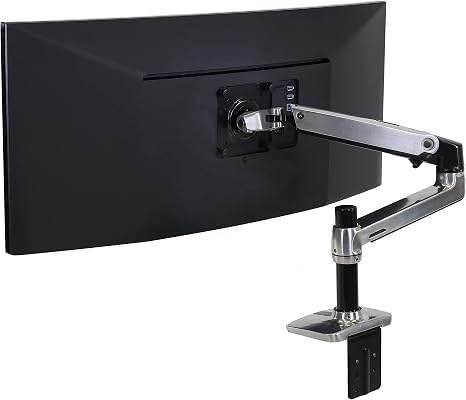
Ergotron LX Monitor Arm, Single Monitor Desk Mount
Holds a flat or curved ultrawide computer monitor up to 34 inches, 7 to 25 lbs, on VESA 75x75mm or 100x100mm, in polished aluminum
It is a desk arm for a computer monitor. It cannot see in the dark, it has no parent unit, and it does not belong in a nursery
Prices and availability were captured from Amazon Creators API and may change.
How I judge a baby monitor
I do not start with the spec sheet, because the spec sheet is written by people who have never stood in a hallway at 3 a.m. trying to read a screen without waking anybody. I start with four questions, and a monitor that fails any of them is not a monitor, it is a gadget.
First, night vision in actual pitch darkness. Not a dim room, not a room with a night light and a hallway glow. Lights off, curtains closed, phone face down. Infrared is the entire job. If I cannot tell whether the blanket is over my baby's face, the camera has failed the only test that matters at 2 a.m.
Second, range from the kitchen. Every parent I know does the same thing: put the baby down, walk to the kitchen, and start a bottle or a load of dishes. A feed that drops when you get to the sink is a screensaver with anxiety attached. Local RF units keep talking because there is no network in the middle, just a radio link between camera and parent unit.
Third, the parent unit itself. This is the part people forget when they buy on camera specs. Battery life, a screen bright enough to read at a glance, buttons you can find without turning on a light, and a volume dial that does not require a menu. A beautiful camera feeding a parent unit that dies at 4 a.m. is a failed device.
Fourth, what happens when the internet hiccups. This is where Wi-Fi monitors separate into two groups: the ones that keep a working local feed, and the ones that go dark while you stare at a spinning circle. If the only way to see your baby is through a router and an account, your baby's sleep is now a network dependency.
And one thing I ignore completely: cry detection. If I can hear my baby cry, a notification telling me my baby is crying has added nothing. If the monitor cannot tell a cry from a box fan, it has added less than nothing.
The value pick: no Wi-Fi, 5-inch LCD, pan and tilt
The No WiFi Baby Monitor Camera with the 5-inch LCD screen is the unit I would hand a first-time parent who does not want a project. There is no pairing, no firmware update, no account creation, and no app to install on a phone that is already full. You plug in the camera, plug in the parent unit, and you have a picture. Pan and tilt means you can aim it without remounting it, which sounds minor until the crib gets moved six inches and you are re-hanging a camera at 38 weeks pregnant.
The night vision and two-way audio are the two features that matter here, and they are the two I would verify in a dark room on the first night rather than trusting a product page. Two-way audio is genuinely useful with a toddler who can answer you, and mostly useless with a newborn who cannot, so weight it accordingly.
What it does not do: there is no app, so you cannot check in from the backyard or from a restaurant. There is no movement or breathing monitoring. The 5-inch screen is smaller than what you get on the Hubble. If you want to see your baby from your phone at work, this is not that monitor, and no amount of good night vision changes it.
The hybrid pick: Hubble Connected Nursery Pal Glow+
The Hubble Connected Nursery Pal Glow+ is the one for a family that wants a dedicated screen and a phone view without choosing between them. You get a 5-inch parent unit, plus Wi-Fi viewing through a free app, plus remote pan tilt zoom, two-way talk, and infrared night vision. The remote pan and tilt matters more than people expect: being able to swing the camera toward the crib from the couch, without walking into the nursery, is the difference between a quick check and a full wake-up.
The 7-color night light and the sleep trainer are the parts I am honest about. They are nice. A night light is a real thing to want with a toddler who is scared of the dark, and a sleep trainer can help a three-year-old understand when it is acceptable to come get you. But neither of them rescues a camera that cannot see in the dark, and a color-changing light should never be the reason you pick one monitor over another.
My one real caution with any Wi-Fi monitor, including this one, is the dependency. The free app viewing is genuinely useful, and it is also the part that stops working when the router reboots at 11 p.m. That is why I like that this system still ships with a parent unit. You get the convenience of the app and the reliability of a local screen in the same box, which is more than most Wi-Fi cameras offer. I skip anything that wants a subscription to see my own baby, and the free app viewing here is worth checking carefully on the listing before you buy, because app policies change.
The sleep-data pick: Babysense True Sleep HD
The Babysense True Sleep HD is the most interesting unit in this comparison, because it addresses a different fear. Most monitors answer "is my baby crying?" This one also answers the question that actually keeps parents awake in the first months, which is "is my baby breathing?"
It does that with two non-contact sensors that go under the mattress, no wearable band, no sock, nothing clipped to a onesie at 3 a.m. Non-wearable is the part I care about. A sensor you have to put on a sleeping baby is a sensor that gets kicked off, and a monitor that alarms because the band slipped is worse than no monitor at all. Full crib coverage from under-mattress sensors is a cleaner idea, and the camera and audio side is included, so you are not buying a second system.
The trade-offs are real. Two sensors mean routing cables under the crib and living with a setup that stays put, so this is not the monitor you unplug and take to grandma's house for the weekend. There is no Wi-Fi, which I count as a feature, and no app, which some parents will count as a loss. If you want movement monitoring and a no-Wi-Fi camera in one purchase, this is the one on this list that does both jobs.
The one that is not a baby monitor: Ergotron LX Monitor Arm
The Ergotron LX Monitor Arm is in this comparison because it showed up in a search for monitors, and I would rather explain it than let you wonder. It is a single monitor desk mount that fits flat and curved ultrawide computer monitors up to 34 inches, handles 7 to 25 lbs, mounts on VESA 75x75mm or 100x100mm, and comes in polished aluminum. It is well made gear for a desk.
It is not a baby monitor. It does not see in the dark, it does not have a parent unit, it does not have night vision, and it does not belong bolted to a nursery wall. Do not buy it for a crib.
Where it does earn a place in a nursery-adjacent conversation: if you work from home and your nap-time setup is a desk with a display and a parent unit beside it, this arm gets your screen to eye level so you can actually work while you keep an eye on the feed. That is a real benefit for a work-from-home parent. It is just not a baby product, and no amount of clever framing changes that.
Trade-offs: local RF versus Wi-Fi, and what I ignore
Local RF, the direct radio link between camera and parent unit, is what I recommend to most families. It never buffers, it never asks for a password reset, and it keeps working when the internet goes out. The two no-Wi-Fi options here are the budget 5-inch LCD unit and the Babysense.
Wi-Fi gets you remote viewing, which matters if you travel for work, and it gets you app features and updates. It also makes your router part of your baby's sleep schedule. The Hubble handles that tension better than most because it still includes a parent unit, so a router reboot costs you the phone view, not the whole monitor.
Subscriptions are the line I will not cross. If seeing your own baby requires a monthly fee, that is a rental, not a purchase. Cry detection is the other feature I ignore, for reasons already covered.
And read the "why it lost" column in the table above more carefully than the "why it won" column. The wins are usually features you can live without. The losses are the things that will annoy you at 3 a.m. for two years.
Which one for which family
- First monitor, tight budget, no interest in apps: the no-Wi-Fi 5-inch LCD camera. It does the core job with the fewest moving parts.
- You want a phone view and a parent unit: the Hubble Nursery Pal Glow+. The dedicated screen is the insurance policy on the app.
- Movement and breathing alerts matter to you: the Babysense True Sleep HD. Non-wearable sensors and a no-Wi-Fi camera in one system.
- You work from home during naps: the Ergotron LX Monitor Arm, for your desk. Not for the crib.
What I'm testing next
I am still running 2026 units through the same routine: pitch-dark checks, the kitchen walk, and a full night on battery for every parent unit that crosses my counter. The question I keep coming back to is the same one I ask at the hospital. Sleep is a medical intervention, and the tool that protects it has to work when you are too tired to troubleshoot. If a monitor needs a manual at 3 a.m., it has already failed.
Buy the one that sees in the dark, reaches the kitchen, and keeps working when the internet does not. Everything else is a feature list.