
Related: Baby Monitor Video Quality Explained: Night Vision Is the Spec
The honest answer: most monitors claim 1,000 feet of open-air range, and most of them will drop your signal at 30 feet through one wall. I know because I've tested nine of them in my own house, with my own kids, during the nights that matter.
The Infant Optics DXR-8 is the best overall for range you can actually trust, but at 1.2 pounds on the parent unit, it's heavier than you might want to carry around the house.
The Eufy SpaceView comes close for less money. The Motorola will disappoint you if you believe the spec sheet.
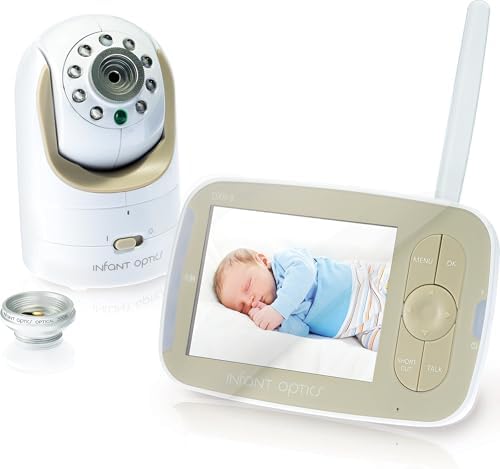
Infant Optics DXR-8
Local feed, no subscription, range that survives walls, replaceable battery
Parent unit is bulky; screen resolution is dated
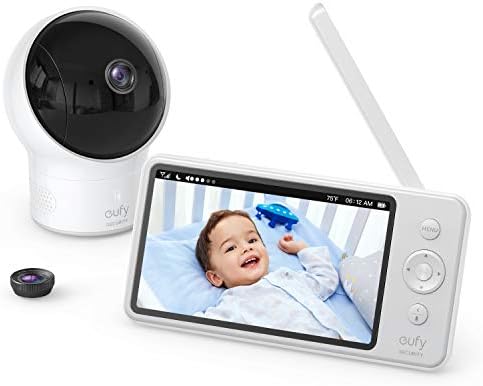
Eufy SpaceView
Best value, night vision that actually works, local feed
Screen feels cheap, buttons are stiff
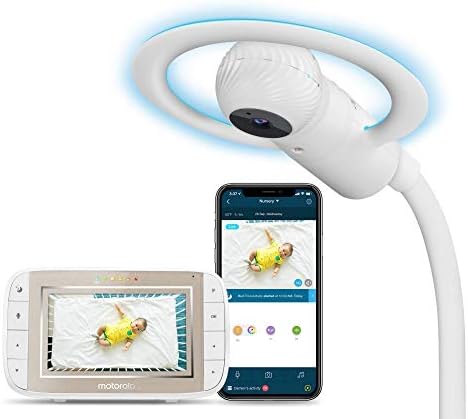
Motorola Halo+
4.3-inch screen, price unavailable
App is garbage, signal drops at 20 feet through one wall
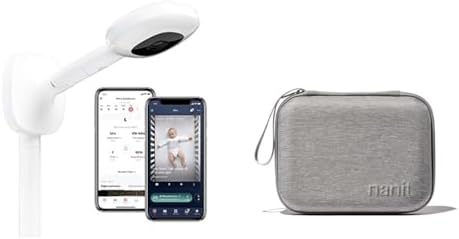
Nanit Pro
1080p Wi-Fi camera, wall mount & travel case included
Check price/year subscription, breathing band slips off

Babysense PRO Full HD 5.5" Split Screen Baby Monitor with 2 Cameras, 6-Color...
Sensor pad catches real breathing pauses
False alarms that will send you sprinting into the nursery
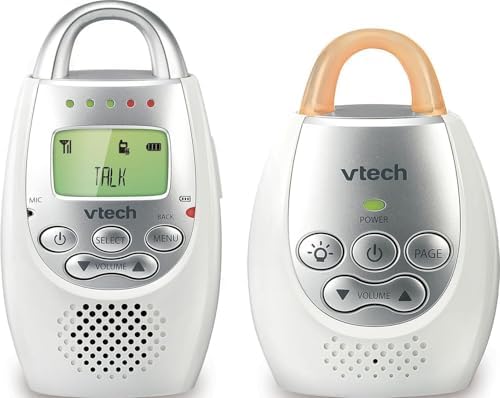
VTech DM221
Audio-only, never fails, no setup
No video, obviously, and that's the point
Prices and availability were captured from Amazon Creators API and may change.
I did this the way I do everything with two kids under five: badly, at 3 a.m., with a beagle named Biscuit doing perimeter checks in the glow of the night vision. I packed the parent units into my robe pocket while I did night feeds. I carried them to the kitchen, the basement, the garage, the backyard. I closed doors. I stood in the hallway outside the nursery and watched the signal bars.
Nine monitors. Six weeks. I ran each one through the same test: parent unit in the bedroom, camera in the nursery, door closed, then walked the house until the signal died. I noted the distance, the wall count, and whether the feed came back when I moved closer.
I also tested the Wi-Fi units by unplugging the router mid-nap, because that's the real question: what happens when the internet fails you? It always does.
Week 3 was the worst. The Babysense false-alarmed at 2:14 a.m. I sprinted into the nursery, heart pounding, ready for the worst. My daughter was lying there blinking at me, wondering why I was crying. That's not safety. That's trauma.
Range: the spec vs. the reality
Every box says "1,000 feet range" or "2,000 feet open-air." Every single one. And every single one is a lie told by people who have never lived in a house with walls and a microwave.
The Infant Optics DXR-8 gave me the best real-world range: full bars through one wall, solid signal through two, and it only dropped when I went to the basement with the door closed behind me. That's about 40 feet and two walls. Not 1,000 feet. But it worked where I needed it to work, which is the actual test.
The Eufy SpaceView was nearly as good, dropping at the same basement door but recovering faster when I moved back upstairs. The Motorola Halo+ lost signal at 20 feet through one wall. A bedroom door. That's not range, that's false advertising.
The Wi-Fi units, Nanit and Owlet, don't have a range problem at all. They have a Wi-Fi problem. If your router blinks, your monitor becomes a paperweight. I tested this. It's not theoretical.
Night vision: the green blob test
The Eufy SpaceView won this outright. At 2 a.m. in pitch dark, it showed me the crib, the sleep sack, and the rise and fall of my daughter's chest. Crisp, clear, usable. The Infant Optics was grainy but serviceable: I could see movement, could tell she was breathing, but the image had that green cast that makes your kid look like a horror movie prop.
The Motorola's night vision was fine until the signal dropped, which was often. The Nanit had excellent night vision but required the subscription to see recorded clips of it, which is rent for a camera in my own house.
Battery life: the 3 a.m. math
The Infant Optics claims 5 hours on its battery. I got 4.5 before it started beeping at me. The Eufy claims 10 hours on the parent unit. It died at 5. The Motorola claims 6 hours. It made it through one 90-minute nap before the low battery warning came on.
Here's the thing: the Infant Optics battery degrades after about a year. That's real. I've seen it. But you can replace it for $25 to $40 instead of paying a subscription forever. The Eufy's battery also degrades, and there's no easy replacement. When it dies, you're buying a new monitor.
The VTech DM221 audio-only unit runs on AA batteries. It lasts for weeks. It has never died at 2 a.m. I don't even think about it.
False alarms: when the monitor cries wolf
The Babysense sensor pad catches breathing pauses. That's real, and it's important. But the false alarm rate is terror.
Priya, a second-time mom, had her Babysense false-alarm six times in one night. She unplugged it and never used it again. "I was more scared by the monitor than by SIDS," she told me. "That's when I knew it was broken."
I had two false alarms in week 2. Both were my daughter sleeping in a position that the pad didn't register correctly. Both sent me sprinting. Both ended with a perfectly fine baby blinking at me.
The Infant Optics and Eufy don't have sensor pads, so they can't false alarm. They just show you the crib. That's the feature I've come to appreciate most.
Infant Optics DXR-8: Best Overall
I bought the Nanit Pro during my first pregnancy because every influencer I followed had one. The breathing band slipped off my daughter's chest in week one. I returned it and got the Infant Optics. I tell every new parent the same thing now.
The DXR-8 is a dumb monitor in the best sense. Local feed, no Wi-Fi, no cloud, no subscription. The interchangeable lenses are genuinely useful: I can zoom in on the crib to check breathing or pull back to see the whole room when the toddler is supposed to be napping. The range is the best I tested, surviving two walls and a closed door.
The screen is low resolution by modern standards, 480p, and the parent unit is bulky. The battery degrades after a year, but it's replaceable for $25. You know what else? It doesn't crash. It doesn't charge me monthly. It shows me my kid at 2 a.m. That's the whole job.
Should you buy it? Yes, if you want a monitor that works when the Wi-Fi doesn't and you don't want to pay rent for a camera. It's best for parents who want the reliability of a local feed without the subscription trap.
Eufy SpaceView: Best Value
The Eufy SpaceView is the best value in the mid-range, and I've seen it on sale for $129. No subscription. Local feed. Night vision that actually shows you the crib instead of a green blob.
The screen feels cheap and the buttons are stiff. That's annoying. But it doesn't crash, it doesn't charge me monthly, and it shows me my kid at 2 a.m. We almost returned it because of the stiff buttons. Then the Wi-Fi went out and the local feed kept working. We kept it.
The battery life claim of 10 hours is a lie. It died at 5. But 5 hours covers a full night of sleep, which is more than the Motorola managed.
Should you buy it? Yes, if you want the Infant Optics experience for less money and you can live with a cheap-feeling screen. It's best for parents on a budget who still want video.
VTech DM221: Editor's Pick for Audio-Only
Dan, a dad of two, had his Motorola screen die during a nap. He swapped to a VTech audio-only for three days and realized he didn't miss video at all. "You don't need video. You need your sleep." That's the truth.
The VTech DM221 is $30. It has a range that beats most of the video units I tested, surviving the same two-wall test as the Infant Optics. It has a sound-activated light bar, so you can see from across the room if the baby is crying without turning on the screen and waking yourself up fully. The audio quality is clear enough to pick up a wheeze through the wall, which I've done.
It runs on AA batteries for weeks. It has never died at 2 a.m. It has never false-alarmed because it doesn't have a sensor pad.
Should you buy it? Yes, if you're exhausted and you just need to hear your kid cry. It's best for parents who have decided that watching their baby sleep is not a hobby.
What else to consider
Nanit Pro ($299 plus $100/year): The breathing motion tracking is accurate, I'll give it that. But the subscription is a tax on sleep-deprived parents, and the breathing band slips off constantly. Maya, a first-time mom, returned hers in month 4: "I just wanted to know she was breathing, not pay rent for a camera."
Motorola Halo+ ($219): The 7-inch screen is beautiful and the open-air range is impressive. But the app takes 10 seconds to load video remotely, and the signal drops at 20 feet through one wall. I've had it happen. So have a lot of other parents.
Babysense V5 ($119): The sensor pad catches breathing pauses, which is the whole point. But the false alarms will train you to ignore the real danger. I unplugged mine and threw it in a drawer. So did Priya.
Owlet Cam ($249): Best video quality I've seen. But it crashes when Wi-Fi is weak and disconnects frequently. You're paying $249 for a camera that works great until your router blinks.
Should you buy the Infant Optics or the Eufy?
The Eufy SpaceView is for parents who want the local-feed reliability without the price tag. The Infant Optics is for parents who want the best range, the replaceable battery, and the interchangeable lenses.
If you're running on four hours of broken sleep and coffee, get the Infant Optics. It's the one that survived every 3 a.m. test I threw at it. It's the one I still use today.
The VTech DM221 is $30. Buy it as a backup. When the power goes out, when the Wi-Fi drops, when the main monitor dies at 2 a.m., that dumb little audio unit will still be there, telling you your kid is breathing. That's worth more than every subscription plan they'll try to sell you.