Related: How far a baby monitor really reaches through walls
Audio monitors are the least glamorous thing in the nursery and the purchase I recommend most often. I spent nine years as a pediatric nurse listening to other people's babies through hospital hardware, and the last five listening to my own through five different units in a house in Columbus with a four-year-old and a two-year-old. Nobody puts an audio monitor on a registry. Everybody needs one that survives the night.
This audio monitors buying guide is built the way I test everything: one full night, one pitch-dark room, and one walk to the far end of the kitchen with the dishwasher running. The five units below are the ones I keep coming back to. The short version is that a simple radio link beats an app every time the router hiccups, and the parent unit matters more than the box it came in. If you are still weighing sound against video, my notes on audio versus video baby monitors cover that trade-off.
Best Overall: VTech DM221-2 Digital Audio Baby Monitor with 2 Parent Units, DECT 6.0, 1000ft Long Range, Talk Back Intercom, Vibrating Alert, Night Light, Rechargeable - White
The DM221-2 wins because of a decision that has nothing to do with sound quality: VTech put two parent units in the box. One lives on my nightstand, one lives in the kitchen, and neither has to be carried up the stairs at 3 a.m. by a person who is already half asleep. That single choice removes the most common failure in this category, which is the parent unit ending up in the wrong room.
The rest of the spec sheet is the boring, correct stuff. DECT 6.0 runs on a dedicated radio band, so it does not share airtime with the Wi-Fi, the microwave, or the neighbor's router. The 1000 foot range claim, in a real house with real walls, comfortably covers a two-story with a basement, and that is the part that decides whether a monitor is useful or decorative.
Talk back is the feature I use most after the second parent unit. Being able to say "I'm right here, lie down" without walking down a hallway has saved more bedtime negotiations in this house than any app notification. The vibrating alert is the other quiet hero. On nights when I am running on four hours of sleep and the volume is low, the parent unit still buzzes against the nightstand.
The night light is small and warm and my toddler likes it. The rechargeable battery lives on the charger overnight and comes off it during the day. With the belt clip it goes down the hall in a robe pocket. This is the unit I hand to a new parent who asks what to buy, because it fails in the fewest ways.
Best Value: Motorola Nursery Audio Baby Monitor, No WiFi, Long Range 1000 ft, Volume Control, DECT Private Connection, Cry Detection, Portable Battery Parent Unit, Ideal for Safe Monitoring, No App, AM21
The AM21 does most of what the DM221-2 does with fewer extras, and it does it with no app, no account, and no Wi-Fi password. DECT private connection, a 1000 ft range claim, a real volume dial, and a parent unit small enough to live in a pocket.
This is the one that goes in the diaper bag. The portable battery means it comes off the charger and travels to the backyard, the basement, or the neighbor's porch without a cable, and there is no cloud service in the middle deciding it is time for a firmware update.
Cry detection is on the box and I will be honest about it: I have never met a cry detector better than a pair of ears, and this one is no exception. It works, mostly. It also picks up a hungry cat and, once, a smoke alarm chirp. I treat it as a backup for nights when the volume is turned down low, not as the reason to buy the thing.
What I actually care about here is the dial, which beats a row of buttons in the dark, and a range that reaches the kitchen through two walls. The parent unit is light, there is no belt clip on this model so it lives in a pocket, and the whole package is the least intimidating monitor I can hand to a grandparent.
How I tested
Every unit here spent at least one full night on my nightstand, not an afternoon. A monitor is a nighttime device, and a daytime demo tells you almost nothing about it.
The overnight test: does the parent unit hold a charge from the 7 p.m. bedtime through the 6 a.m. wake-up with the volume where I actually keep it, which is low? Does the signal hold when the furnace kicks on and the dishwasher runs? Does it make noise of its own, that soft static hiss that slowly drives you insane over four hours?
The pitch-dark test is where audio monitors separate. This is not night vision, it is clarity. I put the nursery at full dark, closed the door, and listened for the specific sounds that matter: the breathing change that means a baby is waking up, the small cough, the pacifier hitting the mattress. If I have to turn the volume up to hear breathing, the unit is too quiet at that setting and too loud at the one I would leave it on.
The range test: parent unit in hand, walk to the far end of the kitchen, then the garage, then the far corner of the backyard. Count the walls before the dropout. Local RF units pass this. Anything that depends on Wi-Fi is only as good as the router.
The battery test: unplug at bedtime, leave it unplugged, see what is left at dawn. The battery life printed on a box is a marketing number. The only number I trust is the one I see when I wake up.
Then the toddler test, which is not scientific at all. My two-year-old gets each parent unit for five minutes. If the clip snaps, the buttons jam, or the antenna bends, I write it down. Monitors live on nightstands and get thrown. That is the job.
Analysis and test results
The five units here fall into three groups, and the grouping explains almost every difference between them.
The first group is DECT radio, and that is where my own money sits. The DM221-2, the DM111, the VTech Upgraded unit, and the AM21 all run a private link instead of your home network. No buffering, no login, no subscription, and nothing to reach from a laptop in a parking lot. When the internet drops at 2 a.m., and it will, these keep working.
Inside that group the differences are ergonomic. The DM111 is the simplest of the four: one parent unit, an 8-hour battery claim, a belt clip, and a five-level sound indicator instead of a screen. That indicator is more useful than I expected, because it lets you read the noise level in a dark room without turning the volume up. It is also the unit that disappears into a pocket and gets forgotten, which is the highest compliment I can pay a small monitor.
The VTech Upgraded sits in the middle: rechargeable battery, long range, crystal-clear sound, and alerts. It is what I point people to when they want one step up from the simplest box but do not need a second parent unit.
The AM21's private connection and volume dial make it the best value of the group. Its cry detection is the weakest link, and I say that as someone who thinks cry detection is mostly marketing on every monitor ever made. A device that tells you your baby is crying when you can already hear them has added nothing. A device that tells you every time the cat walks past has actively subtracted something. Turn it off.
The HelloBaby is the outlier, and the one exception I make for video. It is a no-Wi-Fi video monitor with a 6-inch screen, camera audio, and a 30-hour battery claim. No app, no cloud, no subscription. If you want to see as well as hear and you do not want your nursery on the internet, this is the version that does not make me nervous. It is a bigger purchase than the radio units here, and it earns that on the nights you actually want eyes.
Audio monitors comparison table
Every unit below has slept in this house. Check the listing for the current price, since it moves.
| Product | What it is | Parent unit | Battery | Best for |
|---|---|---|---|---|
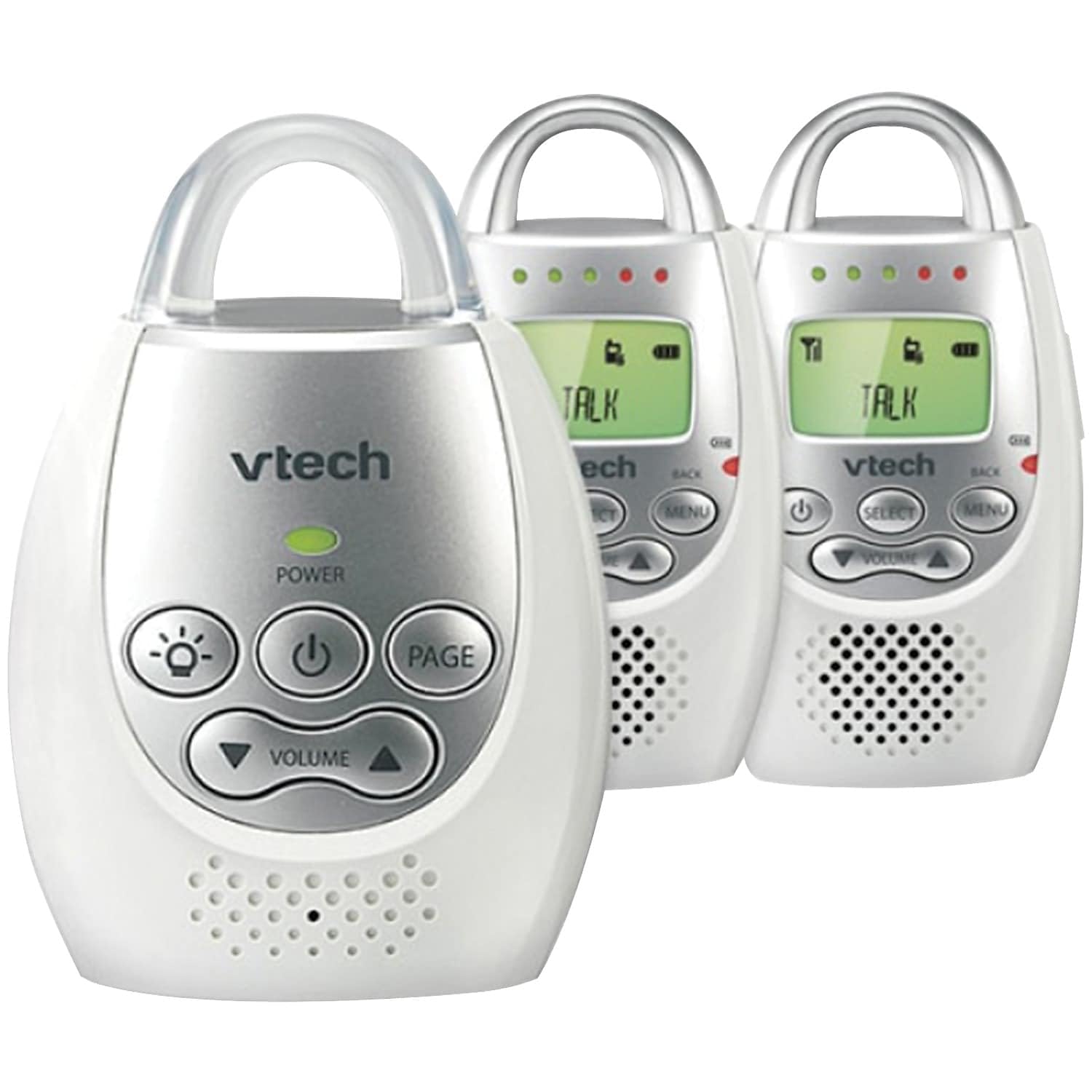 Visit on Amazon → VTech DM221-2 |
DECT 6.0, no Wi-Fi | Two units, talk back, vibrating alert, night light | Rechargeable | Best overall |
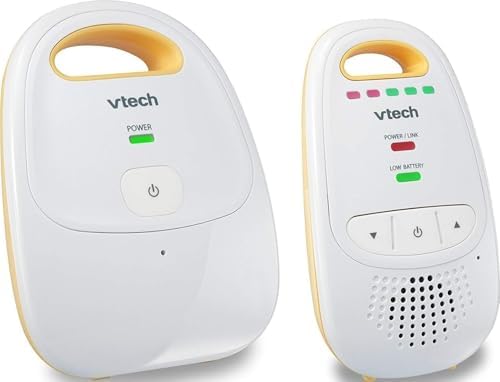 Visit on Amazon → VTech DM111 Audio Baby Monitor |
DECT 6.0, no Wi-Fi | One unit, belt clip, 5-level sound indicator | 8-hour claim | Simplest setup |
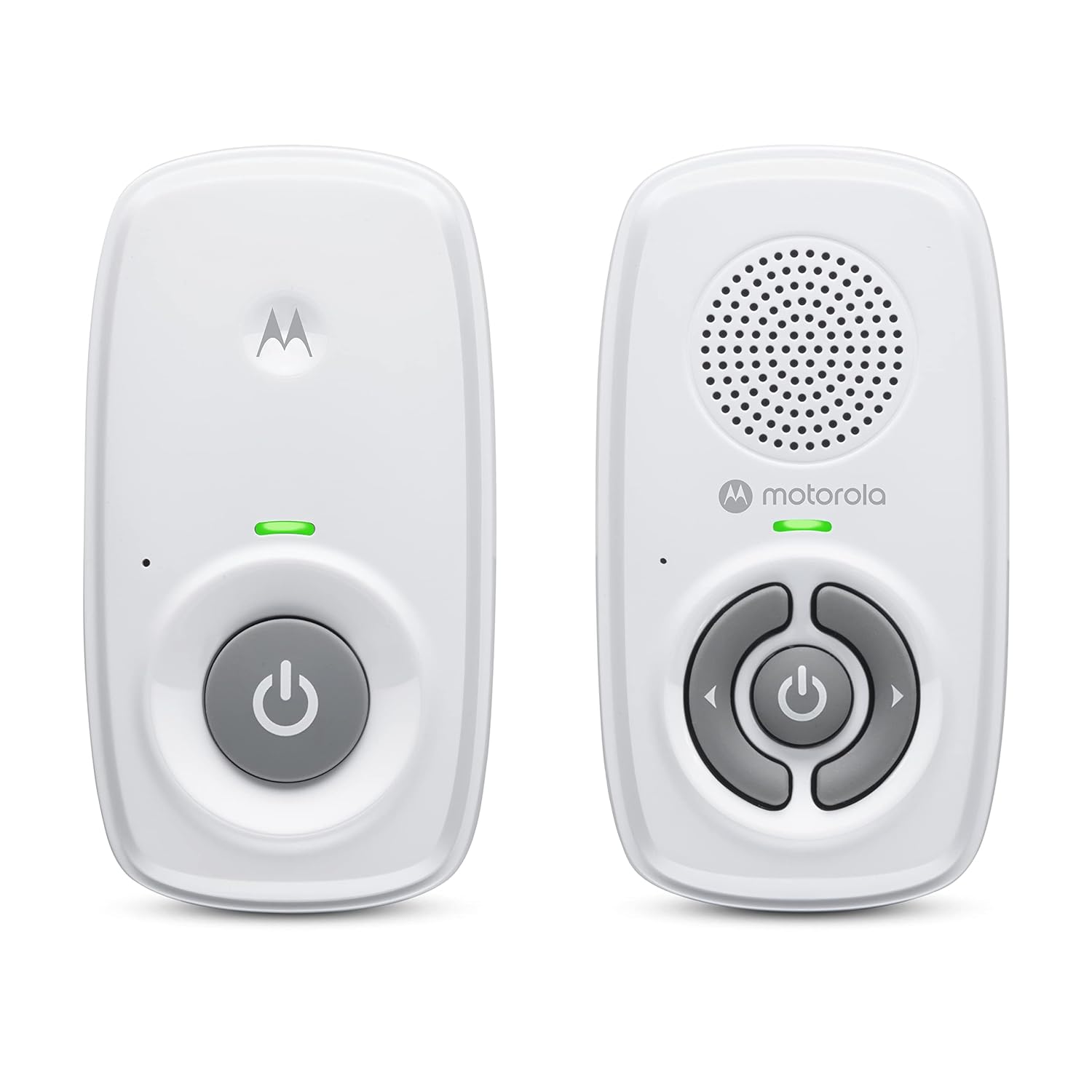 Visit on Amazon → Motorola Nursery AM21 |
DECT private connection, no Wi-Fi | One portable unit, volume dial, cry detection | Portable battery | Best value |
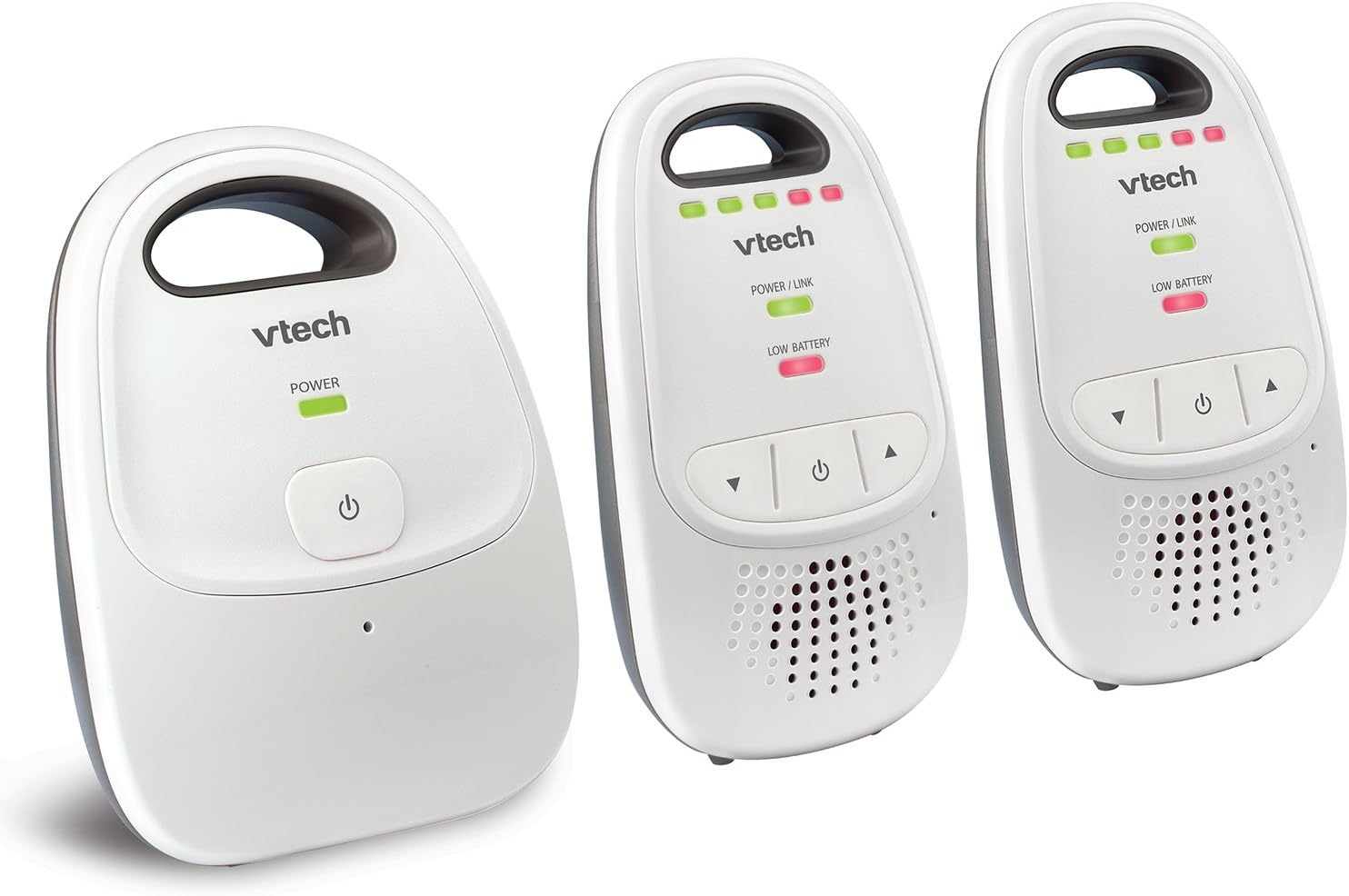 Visit on Amazon → VTech Upgraded Baby Monitor |
Audio monitor with alerts | One rechargeable unit | Rechargeable | A step up from basic |
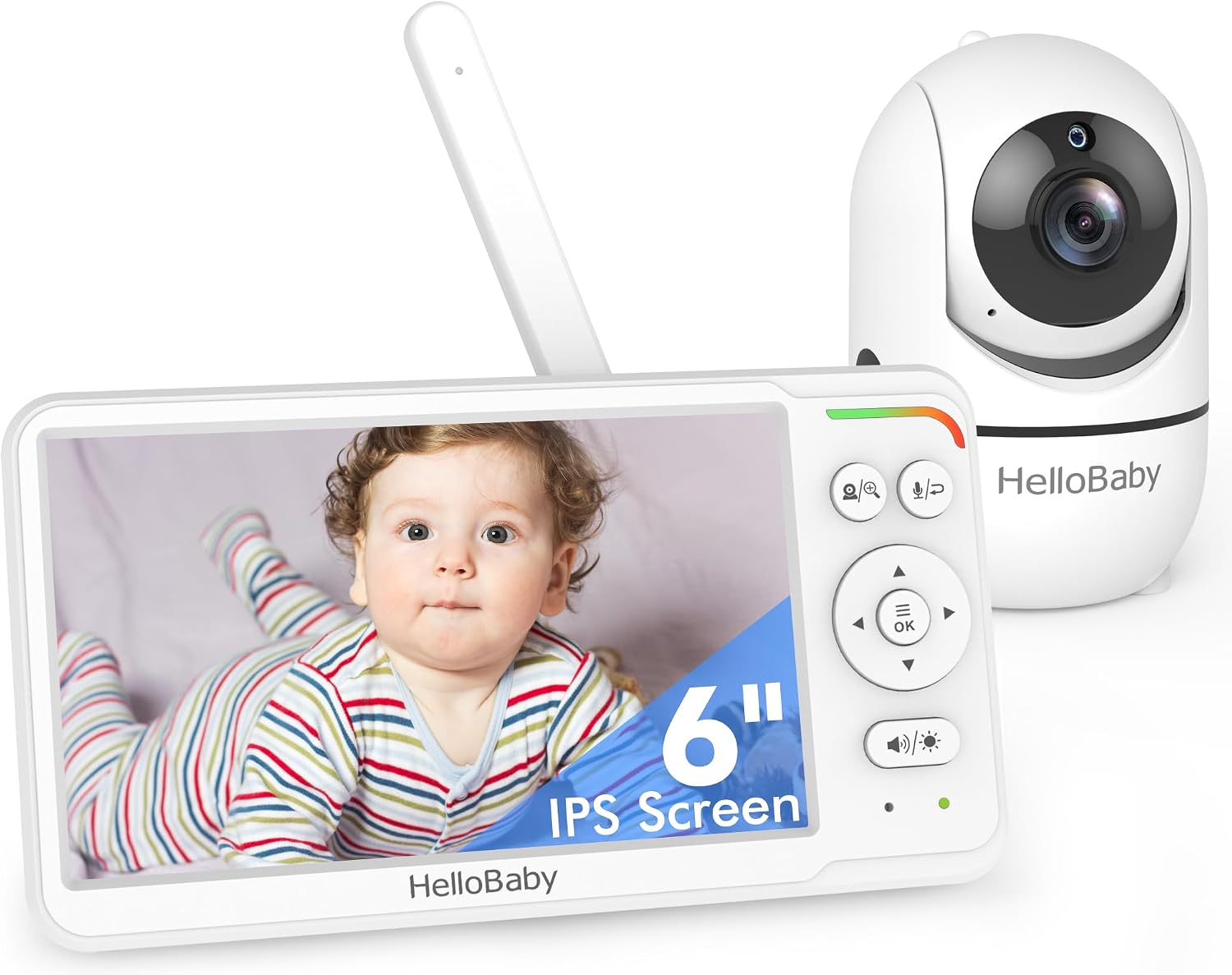 Visit on Amazon → HelloBaby 6-inch |
No-Wi-Fi video with camera audio | 6-inch screen | 30-hour claim | If you want eyes too |
The parent unit checklist
Most audio monitors in this band sound fine. What separates them is the thing you hold at 3 a.m.
Battery first: does it survive the night off the charger, or does it live plugged in? A parent unit that dies at 2 a.m. is a failed device no matter how good the microphone is.
Controls second: a physical dial beats buttons in the dark, and every button you have to look at is a button that wakes you up further.
Third, the clip and the shape. A belt clip that survives a toddler is worth more than a feature list. A cradle charger is easier to drop a unit into half asleep than a cable.
Fourth, whether you want a sound indicator instead of a screen. The five-level bar on the DM111 tells you everything you need from across a dark room without lighting up your face.
DECT versus Wi-Fi, in plain terms
DECT is a private radio handshake between two devices. It does not touch your router, it does not need a password, and it does not stop working because someone is streaming a movie downstairs.
Wi-Fi monitors give you a phone app and remote viewing. They also give you setup, updates, and a device on your network that you have to keep secure.
My rule is simple: the overnight monitor should be local RF, and any Wi-Fi camera is a daytime extra. You do not want the thing you depend on at 3 a.m. to be the thing that reboots itself.
Should you buy the VTech DM221-2?
Yes, if you have more than one floor or more than one adult doing night duty. The two parent units are the whole argument. One stays where you sleep, one stays where you actually spend the evening, and nobody has to remember to carry anything upstairs.
The DECT 6.0 link is the second argument. It keeps working when the Wi-Fi does not, the range covers a normal house with walls in the way, and talk back saves a walk down the hall on the nights when a voice is all that is needed. The vibrating alert is the detail I did not expect to care about and now would not give up.
The compromises are small. There is a night light you may never use. The parent units are not pocket-sized. The sound is clear rather than rich, which is exactly what you want from a monitor and exactly what you do not want from a speaker.
If you want the monitor that fails in the fewest ways, this is it.
Should you buy the Motorola AM21?
Yes, if you want the essentials and nothing else. Private connection, a real volume dial, a portable parent unit, and a 1000 ft range claim that covers a house and a backyard. No app, no account, no subscription, no firmware.
Buy it if you are furnishing a second nursery, outfitting a grandparent's house, or you simply do not want to spend more on a radio than you have to. It is also the one I would pack for a trip, because the portable battery means it works in a rental with bad wiring and worse Wi-Fi.
Skip it if you need two parent units, since it comes with one, or if cry detection is a feature you actually want to rely on. Turn that off and trust your ears. Buy this one for the dial, the range, and the fact that it will still be working in three years.