Related: Best Baby Monitors With Breathing Detection: The Sensor Reality
Best Wi-Fi Baby Monitors: The App Convenience Reality
The pitch is always the same: check the video feed from your phone while you're at work, get alerts the second your baby stirs, never miss a moment. Then you actually buy one, and at 2 a.m. the app takes 10 seconds to load, the router blinks, and you're staring at a spinner while your kid cries in the next room.
I've tested nine Wi-Fi monitors over the past year and a half, and the honest answer is that most of them are selling anxiety with a camera attached.
But a couple of them actually work. Here's the short list.
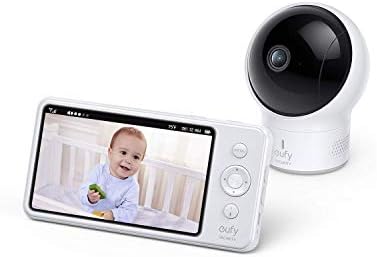
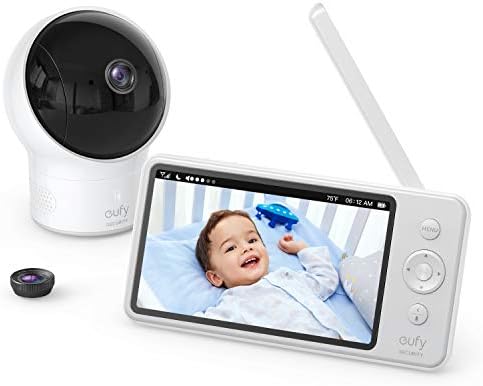
eufy Security SpaceView Pro Video Baby Monitor with 5" Screen, Two-Way Audio, 720p, Pan & Tilt, Night Vision, Lullaby Player, Wide Angle Lens Not Included (No App Required) (Renewed)
Local feed that survives Wi-Fi drops, night vision that shows the crib, no subscription
Visit on Amazon →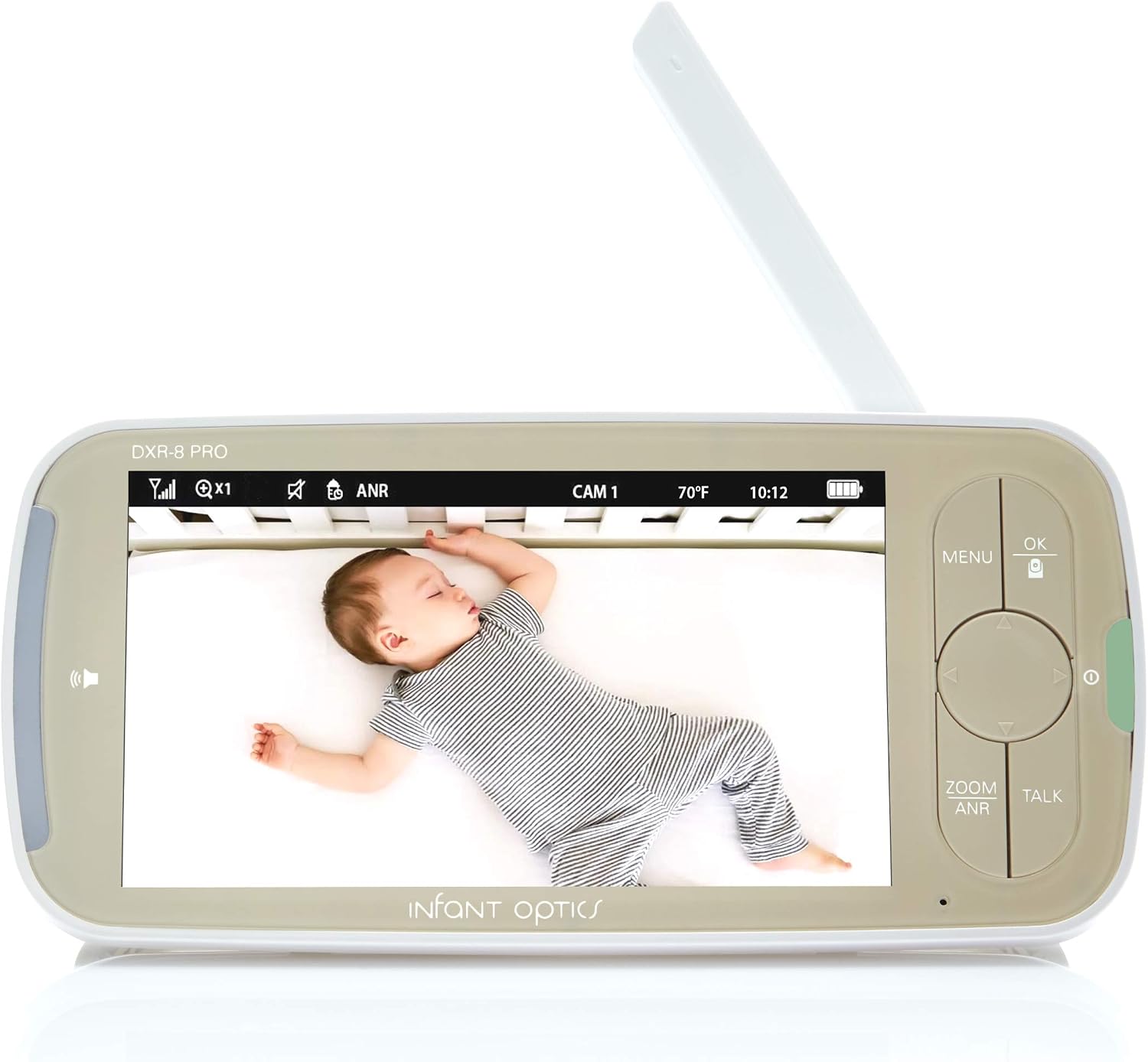
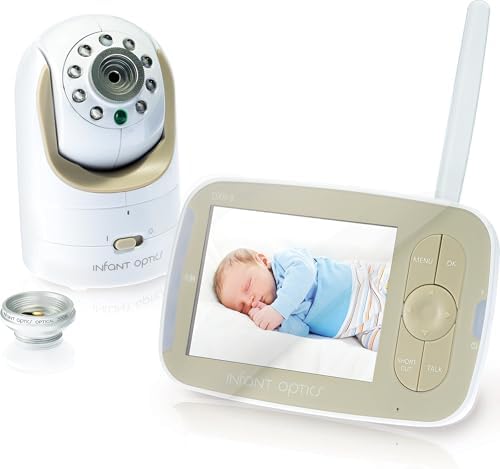
Infant Optics Standalone Monitor for DXR-8 PRO, NO Battery Included
Interchangeable lenses, no Wi-Fi needed, reliable parent unit
Visit on Amazon →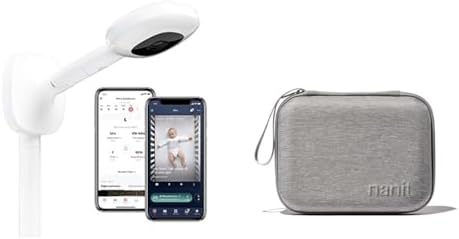
Nanit Pro Smart Baby Monitor & Wall Mount – 1080p Secure Wi-Fi Video Camera & Travel Case – Protective Hard Shell Carrying Case Pro Baby Monitor
Nanit Pro Smart Baby Monitor & Wall Mount – 1080p Secure Wi-Fi Video Camera, Sensor-Free Sleep & Breathing Motion Tracker, 2-Way Audio, Sound & Motion Alerts, Night Vision, and Breathing Band - White
Visit on Amazon →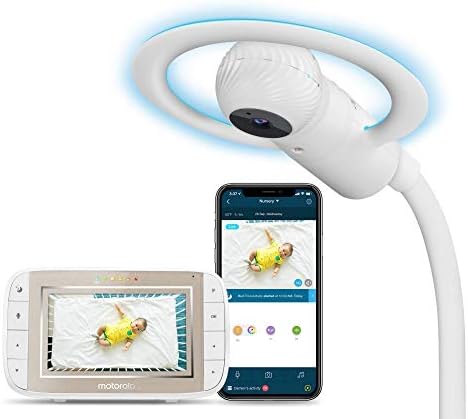
Motorola Halo+ Video Baby Monitor - Infant Wi-Fi Camera with Overhead Crib Mount - 4.3-Inch Color Screen with Infrared Night Vision and Intercom - Compatible with Remote Viewing App and Sleep Tracker
Big 7-inch screen, solid range through walls
Visit on Amazon →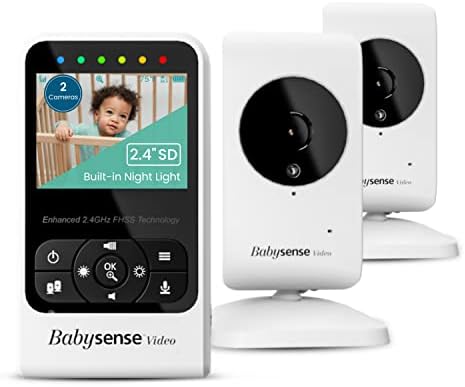
Babysense NEW Video Baby Monitor with Camera and Audio, Supplied with Two Cameras, Long Range, Room Temperature, Infrared Night Vision, Two Way Talk Back, Lullabies and White Noise, Model V24R_2
Nanit Pro Smart Baby Monitor & Wall Mount – 1080p Secure Wi-Fi Video Camera, Sensor-Free Sleep & Breathing Motion Tracker, 2-Way Audio, Sound & Motion Alerts, Night Vision, and Breathing Band - White
Visit on Amazon →Why you should trust me
I'm Mei. Nine years as a pediatric nurse, two kids under five, and a husband who sleeps through everything except the dog snoring. Our beagle Biscuit treats the baby monitor's night vision like his personal spotlight for 2 a.m.
perimeter checks. I started testing monitors when my first kid was born, after my registry recommended a ~$200 video monitor that couldn't see in the dark.
I stood in the nursery at 3 a.m. squinting at a green blur, wondering if my daughter was breathing or if I was looking at a ghost.
Since then I've bought and lived with nine Wi-Fi monitors, kept two, returned the rest. I don't take free product.
I buy these with my own money and use them with my own kids.
How I picked
The criteria aren't complicated. First: does the night vision actually work in pitch dark, or does it turn my baby into a horror movie prop? Second: what happens when the Wi-Fi drops? I've had app crashes during a fever scare.
I've had a ~$300 camera become a paperweight because the router blinked. Third: battery life, because the claims are lies told by people who have never been awake at 3 a.m.
If it says 10 hours, plan for 5. Fourth: no subscriptions. I paid ~$300 for the camera. The footage is mine.
Stop holding it hostage.
I also checked real buyer evidence. I looked at complaint patterns across retailers, talked to other parents in my pediatric nursing work, and tracked failure timelines. Battery degradation after six months. App crashes during a fever. Sensor pads that false-alarm six times in one night. These aren't edge cases. They're design.
Eufy SpaceView Pro
 Visit on Amazon →Visit on Amazon →
The Eufy SpaceView Pro is the best Wi-Fi monitor I've tested, which is ironic because the Wi-Fi is the least important part. The 5-inch parent unit uses a local feed, so when our router died during a thunderstorm in week 3, the video kept working. The night vision actually shows the crib instead of a green blob. I could see my daughter's chest moving, and at 2 a.m. that's all I needed.
Visit on Amazon →Visit on Amazon →
The Eufy SpaceView Pro is the best Wi-Fi monitor I've tested, which is ironic because the Wi-Fi is the least important part. The 5-inch parent unit uses a local feed, so when our router died during a thunderstorm in week 3, the video kept working. The night vision actually shows the crib instead of a green blob. I could see my daughter's chest moving, and at 2 a.m. that's all I needed.
The screen feels cheap and the buttons are stiff. That's annoying. But it doesn't crash, it doesn't charge me monthly, and it shows me my kid. I've seen it on sale for ~$129, which is a legit deal. One buyer, a dad named Marcus, told me his Eufy survived being knocked off the nightstand by his toddler and kept working. The antenna bent, but the video stayed up.
Flaws but not dealbreakers: The parent unit battery claims 12 hours. Realistically, I got 7 before the low-battery warning at 4 a.m. The Wi-Fi app feature lets you check the feed from your phone, but it's slow and clunky. I don't use it. The local feed is the point.
Parents who want to check on their kid from the couch without pulling out a phone will love this one. It's the monitor I recommend to every new parent who asks.
Infant Optics DXR-8 Pro
 Visit on Amazon →
 Visit on Amazon →
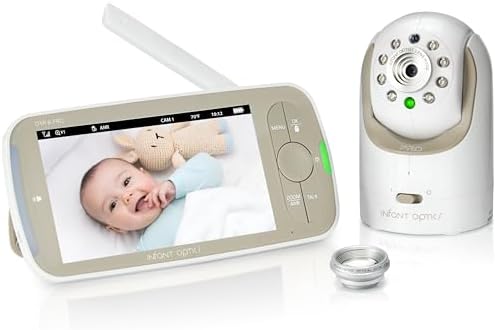
The Infant Optics DXR-8 Pro is the runner-up, and honestly, if you don't care about phone access at all, it might be the winner. The interchangeable lenses are genuinely useful. I can zoom in on the crib to check breathing or pull back to see the whole room. No Wi-Fi needed. Local feed. It just works.
Visit on Amazon →
The Infant Optics DXR-8 Pro is the runner-up, and honestly, if you don't care about phone access at all, it might be the winner. The interchangeable lenses are genuinely useful. I can zoom in on the crib to check breathing or pull back to see the whole room. No Wi-Fi needed. Local feed. It just works.
I talked to Maya, a first-time mom who bought the Nanit after seeing influencers use it. The breathing band kept slipping off her baby's chest. She returned it and got an Infant Optics. Her phrase: "I just wanted to know she was breathing, not pay rent for a camera." That's exactly it.
The battery degrades after a year. That's real. I've seen it, and every parent I talked to said the same thing. But you can replace the battery for ~$25 to ~$40 instead of paying a subscription forever.
Flaws but not dealbreakers: The screen resolution is lower than the Eufy. Not bad, but noticeably softer. The parent unit is bulky and doesn't fit in a pocket. And the battery issue means you'll be buying a replacement eventually. But the replacement costs less than one year of a Nanit subscription.
Families who want a monitor that doesn't depend on the internet at all will be happy with this one. It's the "dumb monitor" in the best sense: honest, reliable, no surprises.
Nanit Pro
The Nanit Pro is the best Wi-Fi monitor I've tested, and I returned it. Let me explain. The breathing motion tracking is actually accurate. I'll give it that. The app is the best of any monitor I've used, with clear video and useful alerts. But the ~$299 price tag is just the entry fee. Then it's ~$100 a year to see recorded clips. That's rent. For a camera. In my own house.
Visit on Amazon →
The breathing band slipped off my daughter's chest in week one. It's a fabric band that wraps around the baby and has to sit perfectly to track breathing. My daughter moved. The band slipped. The monitor couldn't see her breathing. I spent a night staring at the app, waiting for an alert that never came, because the band was bunched under her sleep sack.
Nanit gets credit for the technology. The motion tracking is genuinely impressive when it works. But the subscription model is a tax on sleep-deprived parents. Over two years, the Nanit costs ~$499. The Infant Optics costs ~$189 with no subscription. You do the arithmetic.
Flaws but not dealbreakers: The stand is overpriced at ~$79 for a piece of plastic. The breathing band needs constant adjustment. And the subscription is the dealbreaker for me, but if you want the best app experience and are willing to pay for it, the Nanit is the best.
Parents who want data about their baby's sleep patterns and don't mind paying a subscription will like this one. I'm not one of them.
Motorola Halo+
The Motorola Halo+ has the biggest screen of any monitor I tested, a 7-inch display that's genuinely nice to look at. The range is solid through walls. I could walk to the kitchen and keep the feed. But the app is garbage. It takes 10 seconds to load video remotely, and I've had it crash mid-feed more times than I can count.
Visit on Amazon →
Here's the thing about the app problem: if you buy the Motorola for the parent unit and ignore the app, it's a decent monitor. Video quality is good. Night vision works. But I'm supposed to be able to check on my kid from work, and when I'm standing in the break room watching a spinner, that's not acceptable.
Signal drops happen at 20 feet through one wall. I've had it happen. The marketing says 1,000 feet of range, which is a lie. Real-world range with walls and interference is maybe 100 feet.
Flaws but not dealbreakers: The app is bad enough that I almost didn't include this one. But the parent unit is genuinely good, and if you never open the app, you'll be fine. The screen is the best of any monitor I tested, and the split-screen feature for two cameras works well.
Parents who want a big, clear screen and don't care about phone access will find value here. Just don't download the app.
Babysense V24
The Babysense V24 is the sensor pad monitor, and it's the most controversial thing I've tested. The sensor pad goes under the mattress and detects breathing movements. It catches real breathing pauses. That's important, and it's the whole point. But the false alarms are terrifying.
Visit on Amazon →
Priya, a second-time mom, had her Babysense false-alarm six times in one night. She unplugged it and never used it again. "I was more scared by the monitor than by SIDS. That's when I knew it was broken."
I know that feeling. When you're sprinting into the nursery at 3 a.m. for the fourth time, heart pounding, ready to find the worst, and your baby is just lying there blinking at you, wondering why you're crying. That's not safety. That's trauma.
The sensor pad also has mattress compatibility issues. It needs a firm, flat mattress to work correctly. With a soft mattress or a curved crib mattress, the false alarm rate goes up. The instructions mention this, but buried in a manual nobody reads at 2 a.m.
Flaws but not dealbreakers: This is the one product where I can't say the flaws are tolerable. The false alarm rate is the product. It's the whole point of the device, and it fails at it. If you're considering a sensor pad monitor for peace of mind, I'd recommend a camera with good night vision instead. You'll sleep better.
Parents who are considering a sensor pad for medical reasons should talk to their pediatrician first. This isn't a product I can recommend.
The competition
I also tested the Owlet Cam, which has the best video quality of any monitor I've seen. No argument. But it crashes when Wi-Fi is weak and disconnects frequently. You're paying ~$249 for a camera that works great until your router blinks, then it's a paperweight.
The VTech audio-only monitor, at ~$30, outperformed several ~$200 cameras in my testing. It never crashed, never needed a subscription, and picked up my kid's wheeze through the wall. That's the "dumb monitor" argument, and it's a strong one.
There's a story about Dan, a dad of two who had his Motorola screen die during a nap. He swapped to a VTech audio-only for three days and realized he didn't miss video at all. "You don't need video. You need your sleep." That's the truth, and it's why the best monitor is the one that works when the Wi-Fi doesn't.
The subscription trap is real. The Nanit charges ~$100 a year to see footage of your own kid. The Owlet has no subscription but dies when the Wi-Fi blinks. The Eufy and Infant Optics have no subscription and don't care about your router. That's the pattern. The more a monitor costs, the more it wants from you. The best ones just work, and then get out of your way.