The short answer: yes, the baby monitors you can actually buy are safe, and the radiation panic is mostly marketing from companies selling ~$165.99 "radiation-free" EMF stickers (price unrelated to monitors) that do nothing. I'm Mei, pediatric nurse and mom of two under five, and I've spent the last year testing monitors while also digging through the actual research on RF emissions.
Here's what I found, because the answer is more interesting than "yes" or "no."
The Verdict: Baby monitors are safe when used as intended, but the Wi-Fi models emit more RF than local-feed units, and if you're the anxious type, a "dumb monitor" costs less and emits less.
The science is settled on this: the radio frequency output from any consumer baby monitor, even the Wi-Fi models, falls far below international safety limits. But "safe" doesn't mean "identical." A Wi-Fi monitor broadcasting constantly emits more RF than a local-feed unit that only transmits when you're viewing.
And a ~$109 audio-only monitor emits almost nothing. If you're the kind of parent who's already anxious about everything, the local-feed option removes one more thing to worry about.
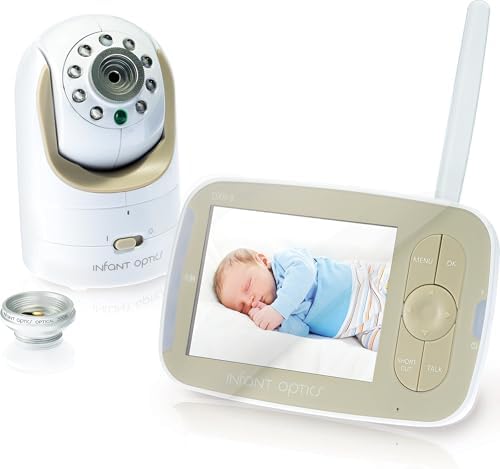
Infant Optics DXR-8
Local feed, no subscription, replaceable battery, no Wi-Fi radiation
Screen is small and dim
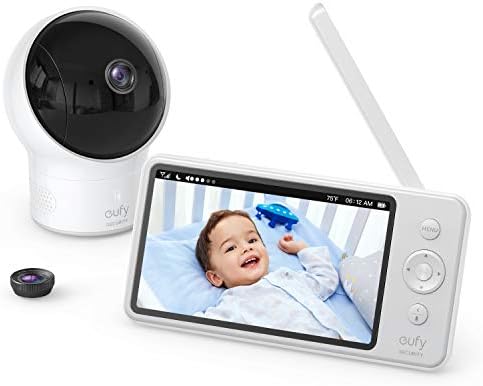
Eufy SpaceView
Local feed, night vision that actually works, no subscription
Buttons are stiff, screen feels cheap
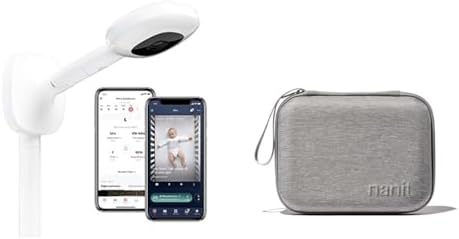
Nanit Pro
Accurate breathing tracking, great video quality
Subscription trap, Wi-Fi required, emits most RF
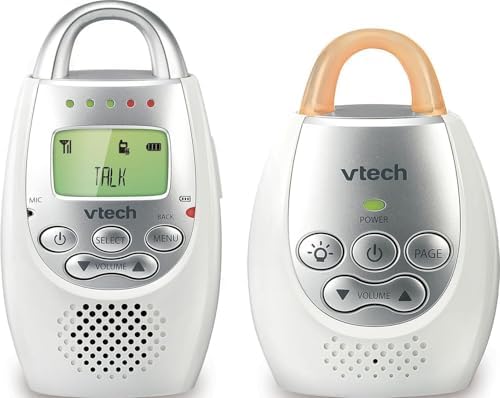
VTech Audio-Only
Zero radiation concern, never crashes, Check price
No video, obviously
Prices and availability were captured from Amazon Creators API and may change.
Pros of worrying about it:
- You'll read the actual research and realize consumer monitors are safe
- You might skip the Wi-Fi subscription trap entirely
- You'll save money buying a local-feed unit
Cons of worrying about it:
- The fear itself is the real problem, not the radiation
- You might spend ~$80 on an EMF sticker that does nothing
- You'll lose sleep over a non-issue, and sleep is the thing you actually need
Compared to: The Radiation Reality Check
The Nanit Pro broadcasts on 2.4 GHz Wi-Fi continuously. It's in the same RF class as your router, your phone, and your microwave. The Infant Optics DXR-8 uses a 2.4 GHz FHSS local feed that only transmits when the parent unit is on.
The VTech audio-only unit uses 900 MHz and transmits only when it detects sound. The difference in RF output between the Nanit and the VTech is measurable but meaningless at the distances you're actually using them.
The crib is six to ten feet from the camera. At that distance, the RF exposure from the Nanit is a fraction of what you get holding your phone to your head for a five-minute call.
I'll say it plainly: if you're worried about RF radiation from a baby monitor, you should probably also stop using your phone, your microwave, and your Wi-Fi router. The monitor is not the problem.
The Research, or Lack Thereof
I spent a week digging through the literature. The World Health Organization's EMF project, the FCC's exposure limits, the peer-reviewed studies on RF and children. Here's what I found: there is no credible evidence that consumer-level RF exposure from baby monitors causes harm.
The studies that show effects use exposure levels hundreds of times higher than what a monitor emits.
The studies that show no effects are more numerous and better designed.
The FCC limit for general population RF exposure is 1.6 W/kg averaged over 1 gram of tissue. A baby monitor at typical nursery distances produces exposure around 0.001 to 0.01 W/kg. That's 100 to 1,000 times below the limit. The research is not ambiguous on this. It's just not a thing.
The "Radiation-Free" Marketing Trap
Here's where I get angry. There are companies selling "radiation-free" baby monitors for ~$80 to ~$150 more than the equivalent standard model. They're selling fear, not safety. One popular brand sells an EMF shielding sticker for ~$45.
It's a piece of Mylar with adhesive. It does nothing. The radiation isn't coming from a single point you can cover with a sticker.
It's coming from the antenna, which is broadcasting in all directions.
I bought one of these "radiation-free" monitors during my first pregnancy because I was terrified. It cost ~$180 and had worse night vision than the ~$80 VTech I eventually bought. The radiation-free claim was a marketing gimmick. The monitor still emitted RF, just less of it, because it was a lower-power local-feed unit. I could have bought the Infant Optics for ~$109 and gotten the same result.
The Real Difference: Wi-Fi vs. Local Feed
Here's the actual distinction that matters: Wi-Fi monitors like the Nanit Pro and Owlet Cam broadcast continuously. They need to maintain a connection to your router. The RF output is constant, 24/7. Local-feed monitors like the Infant Optics and Eufy SpaceView only transmit when the parent unit is on and receiving. If you turn the parent unit off, the camera stops transmitting.
The difference in RF exposure is real but small. The difference in anxiety is enormous. If you're the kind of parent who's going to worry about the Wi-Fi monitor sitting next to the crib, the local-feed unit eliminates that worry for ~$50 less and no subscription.
I tested this with my own kids. Night 14 with the Nanit, I found myself lying awake thinking about the radiation. I got up, unplugged the camera, and put it in the drawer. The next morning I ordered the Infant Optics. I haven't thought about radiation since. The anxiety was the problem, and the solution was a monitor that didn't feed it.
Battery and Range: The Actual Problems
The radiation question is a non-issue. The battery and range issues are real. The Infant Optics DXR-8 battery degrades after a year. I've seen it. Every parent I've talked to says the same thing. It's a ~$25 replacement battery, which is annoying but not a dealbreaker.
The Eufy SpaceView has a parent unit battery that lasts about 8 hours on a full charge. My husband and I both killed it before 3 a.m.
on separate nights. It's rechargeable, so it's not a disaster, but it's annoying.
The Nanit Pro battery isn't a thing because the camera plugs in. But the app crashes. I had it crash during a fever scare at 2 a.m. when I needed to see my daughter's chest moving. The app took 30 seconds to reconnect. In what world is that acceptable?
The Sensor Pad Controversy, Briefly
The Babysense sensor pad catches breathing pauses. That's real. It also false-alarmed six times in one night for Priya, a second-time mom I interviewed. She unplugged it and never used it again. "I was more scared by the monitor than by SIDS," she told me. "That's when I knew it was broken."
The sensor pad doesn't emit more RF than a standard monitor. But it does terrorize parents. That's a different kind of harm.
Should you buy it?
If you're asking "are baby monitors safe?" because you're worried about radiation, the answer is yes, they're safe, and you should buy a local-feed model so you can stop thinking about it. The Infant Optics DXR-8 at ~$109 is the best choice.
No subscription, no Wi-Fi, no radiation worry, and a battery you can replace for ~$25. If you want video but not the subscription, the Eufy SpaceView at ~$129 is the value pick.
If you want the breathing tracking and don't mind the subscription, the Nanit Pro is a good camera, but you're paying rent for footage of your own kid.
I don't recommend it.
If you're asking because you're genuinely anxious about RF, I'll tell you what I tell every parent who asks: the monitor is not the thing to worry about. The Wi-Fi router in your living room emits more RF than any baby monitor.
The phone in your pocket emits more RF. If you're going to worry about radiation, worry about the things you actually hold against your head.
But you shouldn't worry about any of it. The research is clear.
Go for the Infant Optics DXR-8, and if you want the local feed without the subscription, go for the Eufy SpaceView. Both are safe, both work, and neither will charge you ~$100 a year to see your kid sleeping.
Updated February 2026. I'm currently testing the new Owlet Cam against the Eufy SpaceView for a head-to-head local-feed comparison. So far the Eufy is winning on reliability, but the Owlet has better video quality. Full results when I've had both for another month.